
Home
Ex-Facebook employee says network hurts kids, fuels division
- Details
- Written by northsouth
- Category: Americas
- Hits: 1021
By MARCY GORDON
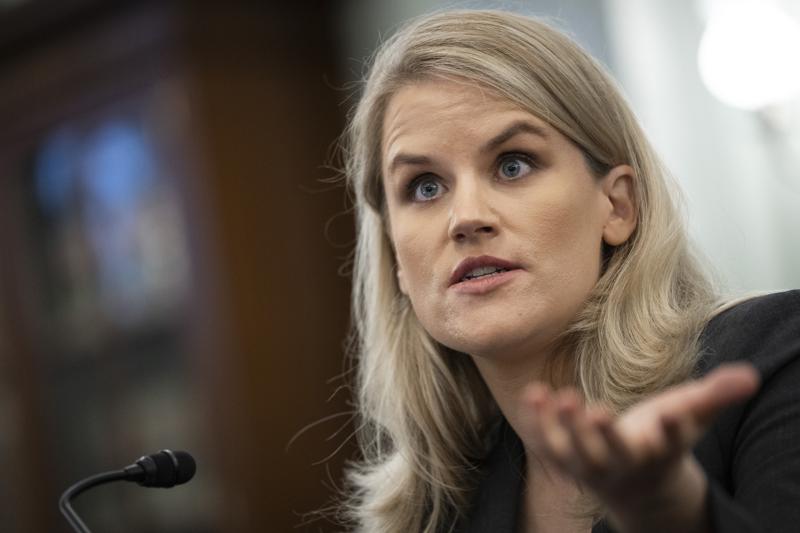
WASHINGTON — A former Facebook data scientist told Congress on Tuesday that the social network giant’s products harm children and fuel polarization in the U.S. while its executives refuse to change because they elevate profits over safety. And she laid responsibility with the company’s CEO Mark Zuckerberg.
Frances Haugen testified to the Senate Commerce Subcommittee on Consumer Protection. Speaking confidently at a charged hearing, she accused the company of being aware of apparent harm to some teens from Instagram and being dishonest in its public fight against hate and misinformation.
“Facebook’s products harm children, stoke division and weaken our democracy,” Haugen said. “The company’s leadership knows how to make Facebook and Instagram safer but won’t make the necessary changes because they have put their astronomical profits before people.”
“Congressional action is needed,” she said. “They won’t solve this crisis without your help.”
Haugen said the company has acknowledged publicly that integrity controls were crucially needed for its systems that stoke the engagement of users, but then it disabled some of those controls.
In dialogue with receptive senators of both parties, Haugen, who focused on algorithm products in her work at Facebook, explained the importance to the company of algorithms that govern what shows up on users’ news feeds. She said a 2018 change to the content flow contributed to more divisiveness and ill will in a network ostensibly created to bring people closer together.
Despite the enmity that the new algorithms were feeding, she said Facebook found that they helped keep people coming back — a pattern that helped the social media giant sell more of the digital ads that generate most of its revenue.
Senators agreed.
“It has profited off spreading misinformation and disinformation and sowing hate,” said Sen. Richard Blumenthal, D-Conn., the panel’s chairman. “Facebook’s answers to Facebook’s destructive impact always seems to be more Facebook, we need more Facebook — which means more pain, and more money for Facebook.”
Haugen said she believed Facebook didn’t set out to build a destructive platform. But “in the end, the buck stops with Mark,” she said referring to Zuckerberg, who controls more than 50% of Facebook’s voting shares. “There is no one currently holding Mark accountable but himself.”
Haugen said she believed that Zuckerberg was familiar with some of the internal research showing concerns for potential negative impacts of Instagram.
The government needs to step in with stricter oversight of the company, Haugen said.
Like fellow tech giants Google, Amazon and Apple, Facebook has enjoyed minimal regulation. A number of bipartisan legislative proposals for the tech industry address data privacy, protection of young people and anti-competitive conduct. But getting new laws through Congress is a heavy slog. The Federal Trade Commission has adopted a stricter stance recently toward Facebook and other companies.
The subcommittee is examining Facebook’s use of information from its own researchers on Instagram that could indicate potential harm for some of its young users, especially girls, while it publicly downplayed the negative impacts. For some of the teens devoted to Facebook’s popular photo-sharing platform, the peer pressure generated by the visually focused Instagram led to mental health and body-image problems, and in some cases, eating disorders and suicidal thoughts, the research leaked by Haugen showed.
One internal study cited 13.5% of teen girls saying Instagram makes thoughts of suicide worse and 17% of teen girls saying it makes eating disorders worse.
Because of the drive for user engagement, Haugen testified, “Facebook knows that they are leading young users to anorexia content. ... It’s just like cigarettes. Teenagers don’t have any self-regulation. We need to protect the kids.”
Haugen has come forward with a wide-ranging condemnation of Facebook, buttressed with tens of thousands of pages of internal research documents she secretly copied before leaving her job in the company’s civic integrity unit. She also has filed complaints with federal authorities alleging that Facebook’s own research shows that it amplifies hate, misinformation and political unrest, but the company hides what it knows.
“The company intentionally hides vital information from the public, from the U.S. government and from governments around the world,” Haugen said. “The documents I have provided to Congress prove that Facebook has repeatedly misled the public about what its own research reveals about the safety of children, the efficacy of its artificial intelligence systems and its role in spreading divisive and extreme messages.”
The former employee challenging the social network giant with 2.8 billion users worldwide and nearly $1 trillion in market value is a 37-year-old data expert from Iowa with a degree in computer engineering and a master’s degree in business from Harvard. Prior to being recruited by Facebook in 2019, she worked for 15 years at tech companies including Google, Pinterest and Yelp.
After recent reports in The Wall Street Journal based on documents she leaked to the newspaper raised a public outcry, Haugen revealed her identity in a CBS “60 Minutes” interview aired Sunday night.
As the public relations debacle over the Instagram research grew last week, Facebook put on hold its work on a kids’ version of Instagram, which the company says is meant mainly for tweens aged 10 to 12.
Haugen said that Facebook prematurely turned off safeguards designed to thwart misinformation and incitement to violence after Joe Biden defeated Donald Trump last year, alleging that contributed to the deadly Jan. 6 assault on the U.S. Capitol.
After the November election, Facebook dissolved the civic integrity unit where Haugen had been working. That, she says, was the moment she realized “I don’t trust that they’re willing to actually invest what needs to be invested to keep Facebook from being dangerous.”
Haugen says she told Facebook executives when they recruited her that she wanted to work in an area of the company that fights misinformation, because she had lost a friend to online conspiracy theories.
Facebook maintains that Haugen’s allegations are misleading and insists there is no evidence to support the premise that it is the primary cause of social polarization.
“Even with the most sophisticated technology, which I believe we deploy, even with the tens of thousands of people that we employ to try and maintain safety and integrity on our platform, we’re never going to be absolutely on top of this 100% of the time,” Nick Clegg, Facebook’s vice president of policy and public affairs, said Sunday on CNN’s “Reliable Sources.”
That’s because of the “instantaneous and spontaneous form of communication” on Facebook, Clegg said, adding, “I think we do more than any reasonable person can expect to.”
CIA ‘discussed assassinating Assange’
- Details
- Written by northsouth
- Category: Americas
- Hits: 1097

NEW YORK - The CIA discussed abducting and assassinating WikiLeaks founder Julian Assange, according to a US report citing former officials.
Yahoo News reported that the discussions on kidnapping or killing Assange took place in 2017, as the Australian activist was entering his fifth year sheltering in the Ecuadorian embassy.
Some senior officials inside the CIA and the Trump administration even discussed killing Assange, going so far as to request “sketches” or “options” for how to assassinate him. Discussions over kidnapping or killing Assange occurred “at the highest levels” of the Trump administration, said a former senior counterintelligence official. “There seemed to be no boundaries.”
A former Trump national security official said the senior CIA officials “were seeing blood.”
President Trump’s newly installed CIA director, Mike Pompeo, was seeking revenge on WikiLeaks and Assange, who had sought refuge in the Ecuadorian Embassy since 2012 to avoid extradition to Sweden on rape allegations he denied. Pompeo and other top agency leaders “were completely detached from reality because they were so embarrassed about Vault 7,” said a former Trump national security official. “They were seeing blood.”
The CIA’s fury at WikiLeaks led Pompeo to publicly describe the group in 2017 as a “non-state hostile intelligence service.” More than just a provocative talking point, the designation opened the door for agency operatives to take far more aggressive actions, treating the organization as it does adversary spy services, former intelligence officials told Yahoo News.
Within months, U.S. spies were monitoring the communications and movements of numerous WikiLeaks personnel, including audio and visual surveillance of Assange himself, according to former officials.
This Yahoo News investigation, based on conversations with more than 30 former U.S. officials — eight of whom described details of the CIA’s proposals to abduct Assange — reveals for the first time one of the most contentious intelligence debates of the Trump presidency and exposes new details about the U.S. government’s war on WikiLeaks. It was a campaign spearheaded by Pompeo that bent important legal strictures, potentially jeopardized the Justice Department’s work toward prosecuting Assange, and risked a damaging episode in the United Kingdom, the United States’ closest ally.
“As an American citizen, I find it absolutely outrageous that our government would be contemplating kidnapping or assassinating somebody without any judicial process simply because he had published truthful information,” Barry Pollack, Assange’s U.S. lawyer, told Yahoo News.
“My hope and expectation is that the U.K. courts will consider this information and it will further bolster its decision not to extradite to the U.S.,” Pollack added.
There is no indication that the most extreme measures targeting Assange were ever approved, in part because of objections from White House lawyers, but the agency’s WikiLeaks proposals so worried some administration officials that they quietly reached out to staffers and members of Congress on the House and Senate intelligence committees to alert them to what Pompeo was suggesting. “There were serious intel oversight concerns that were being raised through this escapade,” said a Trump national security official.
Some National Security Council officials worried that the CIA’s proposals to kidnap Assange would not only be illegal but also might jeopardize the prosecution of the WikiLeaks founder. Concerned the CIA’s plans would derail a potential criminal case, the Justice Department expedited the drafting of charges against Assange to ensure that they were in place if he were brought to the United States.
In late 2017, in the midst of the debate over kidnapping and other extreme measures, the agency’s plans were upended when U.S. officials picked up what they viewed as alarming reports that Russian intelligence operatives were preparing to sneak Assange out of the United Kingdom and spirit him away to Moscow.
The intelligence reporting about a possible breakout was viewed as credible at the highest levels of the U.S. government. At the time, Ecuadorian officials had begun efforts to grant Assange diplomatic status as part of a scheme to give him cover to leave the embassy and fly to Moscow to serve in the country’s Russian mission.
In response, the CIA and the White House began preparing for a number of scenarios to foil Assange’s Russian departure plans, according to three former officials. Those included potential gun battles with Kremlin operatives on the streets of London, crashing a car into a Russian diplomatic vehicle transporting Assange and then grabbing him, and shooting out the tires of a Russian plane carrying Assange before it could take off for Moscow. (U.S. officials asked their British counterparts to do the shooting if gunfire was required, and the British agreed, according to a former senior administration official.)
“We had all sorts of reasons to believe he was contemplating getting the hell out of there,” said the former senior administration official, adding that one report said Assange might try to escape the embassy hidden in a laundry cart. “It was going to be like a prison break movie.”
The intrigue over a potential Assange escape set off a wild scramble among rival spy services in London. American, British and Russian agencies, among others, stationed undercover operatives around the Ecuadorian Embassy. In the Russians’ case, it was to facilitate a breakout. For the U.S. and allied services, it was to block such an escape. “It was beyond comical,” said the former senior official. “It got to the point where every human being in a three-block radius was working for one of the intelligence services — whether they were street sweepers or police officers or security guards.”
White House officials briefed Trump and warned him that the matter could provoke an international incident — or worse. “We told him, this is going to get ugly,” said the former official.
As the debate over WikiLeaks intensified, some in the White House worried that the campaign against the organization would end up “weakening America,” as one Trump national security official put it, by lowering barriers that prevent the government from targeting mainstream journalists and news organizations, said former officials.
The fear at the National Security Council, the former official said, could be summed up as, “Where does this stop?”
When WikiLeaks launched its website in December 2006, it was a nearly unprecedented model: Anyone anywhere could submit materials anonymously for publication. And they did, on topics ranging from secret fraternity rites to details of the U.S. government’s Guantánamo Bay detainee operations.
Yet Assange, the lanky Australian activist who led the organization, didn’t get much attention until 2010, when WikiLeaks released gun camera footage of a 2007 airstrike by U.S. Army helicopters in Baghdad that killed at least a dozen people, including two Reuters journalists, and wounded two young children. The Pentagon had refused to release the dramatic video, but someone had provided it to WikiLeaks.
Later that year, WikiLeaks also published several caches of classified and sensitive U.S. government documents related to the wars in Afghanistan and Iraq, as well as more than 250,000 U.S. diplomatic cables. Assange was hailed in some circles as a hero and in others as a villain. For U.S. intelligence and law enforcement agencies, the question was how to deal with the group, which operated differently than typical news outlets. “The problem posed by WikiLeaks was, there wasn’t anything like it,” said a former intelligence official.
How to define WikiLeaks has long confounded everyone from government officials to press advocates. Some view it as an independent journalistic institution, while others have asserted it is a handmaiden to foreign spy services.
“They’re not a journalistic organization, they’re nowhere near it,” William Evanina, who retired as the U.S.’s top counterintelligence official in early 2021, told Yahoo News in an interview. Evanina declined to discuss specific U.S. proposals regarding Assange or WikiLeaks.
Among the journalists some U.S. officials wanted to designate as “information brokers” were Glenn Greenwald, then a columnist for the Guardian, and Laura Poitras, a documentary filmmaker, who had both been instrumental in publishing documents provided by Snowden.
“Is WikiLeaks a journalistic outlet? Are Laura Poitras and Glenn Greenwald truly journalists?” the former official said. “We tried to change the definition of them, and I preached this to the White House, and got rejected.”
The Obama administration’s policy was, “If there’s published works out there, doesn’t matter the venue, then we have to treat them as First-Amendment-protected individuals,” the former senior counterintelligence official said. “There were some exceptions to that rule, but they were very, very, very few and far between.” WikiLeaks, the administration decided, did not fit that exception.
In a statement to Yahoo News, Poitras said reported attempts to classify herself, Greenwald and Assange as “information brokers” rather than journalists are “bone-chilling and a threat to journalists worldwide.”
“That the CIA also conspired to seek the rendition and extrajudicial assassination of Julian Assange is a state-sponsored crime against the press,” she added.
“I am not the least bit surprised that the CIA, a longtime authoritarian and antidemocratic institution, plotted to find a way to criminalize journalism and spy on and commit other acts of aggression against journalists,” Greenwald told Yahoo News.
By 2015, WikiLeaks was the subject of an intense debate over whether the organization should be targeted by law enforcement or spy agencies. Some argued that the FBI should have sole responsibility for investigating WikiLeaks, with no role for the CIA or the NSA. The Justice Department, in particular, was “very protective” of its authorities over whether to charge Assange and whether to treat WikiLeaks “like a media outlet,” said Robert Litt, the intelligence community’s senior lawyer during the Obama administration.
Then, in the summer of 2016, at the height of the presidential election season, came a seismic episode in the U.S. government’s evolving approach to WikiLeaks, when the website began publishing Democratic Party emails. The U.S. intelligence community later concluded the Russian military intelligence agency known as the GRU had hacked the emails.
In response to the leak, the NSA began surveilling the Twitter accounts of the suspected Russian intelligence operatives who were disseminating the leaked Democratic Party emails, according to a former CIA official. This collection revealed direct messages between the operatives, who went by the moniker Guccifer 2.0, and WikiLeaks’ Twitter account. Assange at the time steadfastly denied that the Russian government was the source for the emails, which were also published by mainstream news organizations.
Even so, Assange’s communication with the suspected operatives settled the matter for some U.S. officials. The events of 2016 “really crystallized” U.S. intelligence officials’ belief that the WikiLeaks founder “was acting in collusion with people who were using him to hurt the interests of the United States,” said Litt.
After the publication of the Democratic Party emails, there was “zero debate” on the issue of whether the CIA would increase its spying on WikiLeaks, said a former intelligence official. But there was still “sensitivity on how we would collect on them,” the former official added.
The CIA now considered people affiliated with WikiLeaks valid targets for various types of spying, including close-in technical collection — such as bugs — sometimes enabled by in-person espionage, and “remote operations,” meaning, among other things, the hacking of WikiLeaks members’ devices from afar, according to former intelligence officials.
The Obama administration’s view of WikiLeaks underwent what Evanina described as a “sea change” shortly before Donald Trump, helped in part by WikiLeaks’ release of Democratic campaign emails, won a surprise victory over Hillary Clinton in the 2016 election.
On April 13, 2017, wearing a U.S. flag pin on the left lapel of his dark gray suit, Pompeo strode to the podium at the Center for Strategic and International Studies (CSIS), a Washington think tank, to deliver to a standing-room-only crowd his first public remarks as Trump’s CIA director.
Rather than use the platform to give an overview of global challenges or to lay out any bureaucratic changes he was planning to make at the agency, Pompeo devoted much of his speech to the threat posed by WikiLeaks.
“WikiLeaks walks like a hostile intelligence service and talks like a hostile intelligence service and has encouraged its followers to find jobs at the CIA in order to obtain intelligence,” he said.
“It’s time to call out WikiLeaks for what it really is: a non-state hostile intelligence service often abetted by state actors like Russia,” he continued.
Julian Assange has been fighting extradition from the UK for more than a decade, during which time he has sought asylum in the Ecuadorian embassy in London, and endured the coronavirus pandemic in Belmarsh prison.
The case brought against the WikiLeaks founder by the US government could see him face a sentence of 175 years imprisonment, but he fears that if extradited to the US he will be detained in Guantanamo Bay and given the death penalty.
MPs in the UK and Australia, as well as journalists and human rights groups, have urged the US to drop the case. But President Joe Biden has “signaled that for now” he will continue Donald Trump’s attempt to prosecute him, The New York Times reports.
For more details, visit: https://news.yahoo.com/kidnapping-assassination-and-a-london-shoot-out-inside-the-ci-as-secret-war-plans-against-wiki-leaks-090057786.html?utm_source=WikiLeaks+Shop&utm_campaign=9f61c6126a-EMAIL_CAMPAIGN_5_11_2021_0_3_COPY_01&utm_medium=email&utm_term=0_94f18156c4-9f61c6126a-100146477&mc_cid=9f61c6126a&mc_eid=UNIQID
Many Haitian migrants are being released in US
- Details
- Written by northsouth
- Category: Americas
- Hits: 1061
By ELLIOT SPAGAT, MARIA VERZA and JUAN A. LOZANO
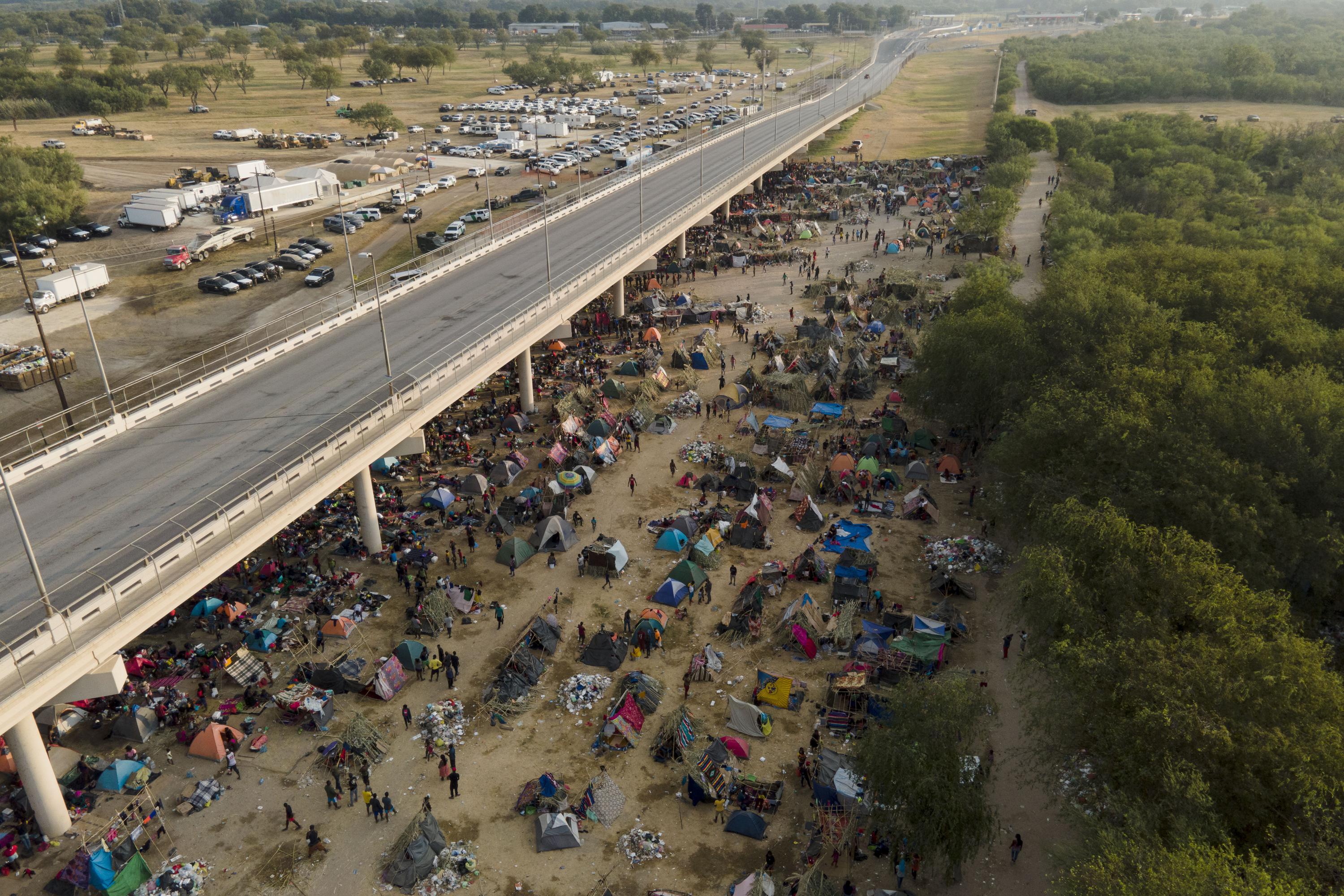
DEL RIO, Texas — Many Haitian migrants camped in a small Texas border town are being released in the United States, two U.S. officials said, undercutting the Biden administration’s public statements that the thousands in the camp faced immediate expulsion.
Haitians have been freed on a “very, very large scale” in recent days, according to one U.S. official who put the figure in the thousands. The official, with direct knowledge of operations who was not authorized to discuss the matter Tuesday and thus spoke on condition of anonymity.
Many have been released with notices to appear at an immigration office within 60 days, an outcome that requires less processing time from Border Patrol agents than ordering an appearance in immigration court and points to the speed at which authorities are moving, the official said.
The Homeland Security Department has been busing Haitians from Del Rio to El Paso, Laredo and Rio Grande Valley along the Texas border, and this week added flights to Tucson, Arizona, the official said. They are processed by the Border Patrol at those locations.
A second U.S. official, also with direct knowledge and speaking on the condition of anonymity, said large numbers of Haitians were being processed under immigration laws and not being placed on expulsion flights to Haiti that started Sunday. The official couldn’t be more specific about how many.
U.S. authorities scrambled in recent days for buses to Tucson but resorted to flights when they couldn’t find enough transportation contractors, both officials said. Coast Guard planes took Haitians from Del Rio to El Paso.
The releases in the U.S. were occurring despite the signaling of a massive effort to expel Haitians on flights to Haiti under pandemic-related authority that denies migrants an opportunity to seek asylum. A third U.S. official not authorized to discuss operations said there were seven daily flights to Haiti planned starting Wednesday.
Accounts of wide-scale releases — some observed at the Del Rio bus station by Associated Press journalists — are at odds with statements a day earlier by Homeland Security Secretary Alejandro Mayorkas, who traveled to Del Rio to promise swift action.
“If you come to the United States illegally, you will be returned, your journey will not succeed, and you will be endangering your life and your family’s life,” he said at a Monday news conference.
The releases come amid a quick effort to empty the camp under a bridge that, according to some estimates, held more than 14,000 people over the weekend in a town of 35,000 people. Texas Gov. Greg Abbott, during a visit Tuesday to Del Rio, said the county’s top official told him the most recent tally at the camp was about 8,600 migrants.
The criteria for deciding who is flown to Haiti and who is released in the U.S. was unclear, but two U.S. officials said single adults were the priority for expulsion flights.
The Homeland Security Department did not immediately respond to a request for comment late Tuesday night.
Meanwhile, Mexico has begun busing and flying Haitian migrants away from the U.S. border, authorities said Tuesday, signaling a new level of support for the United States as the camp presented President Joe Biden with a humanitarian and increasingly political challenge.
The White House is facing sharp bipartisan condemnation. Republicans say Biden administration policies led Haitians to believe they would get asylum. Democrats are expressing outrage after images went viral this week of Border Patrol agents on horseback using aggressive tactics against the migrants.
Mexico has helped at key moments before. It intensified patrols to stop unaccompanied Central American children from reaching the Texas border in 2014, allowed tens of thousands of asylum-seekers to wait in Mexico for hearings in U.S. immigration courts in 2019 and, just last month, began deporting Central American migrants to Guatemala after the Biden administration flew them to southern Mexico.
Marcelo Ebrard, Mexico’s foreign relations secretary, said Tuesday he had spoken with his U.S. counterpart, Secretary of State Antony Blinken, about the Haitians’ situation. Ebrard said most of the Haitians already had refugee status in Chile or Brazil and weren’t seeking it in Mexico.
“What they are asking for is to be allowed to pass freely through Mexico to the United States,” Ebrard said.
Two Mexican federal officials, who requested anonymity because they were not authorized to speak publicly, confirmed Mexico’s actions.
One of the officials said three busloads of migrants left Acuña on Tuesday morning for Piedras Negras, about 55 miles (90 kilometers) down the border, where they boarded a flight to the southern city of Villahermosa in the state of Tabasco.
The other official said there was a flight Monday from the northern city of Monterrey to the southern city of Tapachula near the Guatemala border. Tapachula is home to the largest immigrant detention center in Latin America. The flight carried about 100 migrants who had been picked up around the bus station in Monterrey, a hub for various routes north to the U.S. border.
The second official said the plan was to move to Tapachula all Haitians who already solicited asylum in Mexico.
The Haitian migrants who are already in Mexico’s detention centers and have not requested asylum will be the first to be flown directly to Haiti once Mexico begins those flights, according to the official.
Around Ciudad Acuña, Mexican authorities were stepping up efforts to move migrants away from the border. There were detentions overnight by immigration agents and raids on hotels known to house migrants.
“All of a sudden they knocked on the door and (yelled) ‘immigration,’ ‘police,’ as if they were looking for drug traffickers,” said Freddy Registre, a 37-year-old Venezuelan staying at one hotel with his Haitian wife, Vedette Dollard. The couple was surprised at midnight.
Authorities took four people plus others who were outside the hotel, he said. “They took our telephones to investigate and took us to the immigration offices, took our photos,” Registre said. They were held overnight but finally were given their phones back and released. Authorities gave them two options: leave Mexico or return to Tapachula.
On Tuesday afternoon, they decided to leave town. They bought tickets for a bus ride to the Gulf Coast state of Veracruz, planning to continue to Tapachula where they had already applied for asylum.
Others left without being told. Small groups arrived at Ciudad Acuña’s bus station to buy tickets to Veracruz, Monterrey and Mexico City. The same bus lines prohibited from selling them tickets for rides north through Mexico, sold them tickets to head south without issue.
In Haiti, dozens of migrants upset about being deported from the U.S. tried to rush back into a plane that landed Tuesday afternoon in Port-au-Prince as they yelled at authorities. A security guard closed the plane door in time as some deportees began throwing rocks and shoes at the plane. Several of them lost their belongings in the scuffle as police arrived. The group was disembarking from one of three flights scheduled for the day.
Gates, Rockefeller warn leaders about pandemic’s impact
- Details
- Written by northsouth
- Category: Americas
- Hits: 1046

By ALEX DANIELS of The Chronicle of Philanthropy
NEW YORK - Just ahead of the annual meeting of the U.N. General Assembly that opens on Tuesday, leaders of the Gates and Rockefeller Foundations — grant makers that have committed billions of dollars to fight the coronavirus — are warning that without larger government and philanthropic investments in the manufacture and delivery of vaccines to people in poor nations, the pandemic could set back global progress on education, public health, and gender equality for years.
The calls from philanthropy leaders for more action from wealthy countries comes as President Biden plans to call for a “COVID Summit” to coincide with the meeting, according to news reports.
In an annual analysis of progress made toward development goals set by the United Nations on poverty, access to clean water, gender equality, and other indicators of well-being, the Gates Foundation found that the spread of the pandemic had significantly reversed progress made in recent years.
A big reason is that the disease disproportionately hit poor countries that did not have access to COVID vaccines. More than 80 percent of COVID vaccines have been administered to people in wealthy countries, according to the report. The entire continent of Africa, the report noted, has a population about 30 times that of California. But the number of people vaccinated was roughly the same through the first half of the year.
The health crisis cast a shadow over many measures of well-being. During the pandemic, childhood immunizations over all dropped 7%. Health officials last year predicted it was going to be even worse, but the decline still represents 10 million children who have fallen behind immunization schedules. While men’s employment is expected to return to pre-pandemic levels this year, 13 million fewer women will have jobs than in 2019, according to the report.
“The lack of equitable access to COVID-19 vaccines is a public-health tragedy,” said Bill Gates, in statement accompanying the report. “We face the very real risk that in the future, wealthy countries and communities will begin treating COVID-19 as yet another disease of poverty. We can’t put the pandemic behind us until everyone, regardless of where they live, has access to vaccines.”
While the Gates Foundation has been one of the biggest philanthropic supporters in the fight against COVID, pouring $1.8 billion into a range of global health efforts to curb the spread of the disease, it has also attracted significant criticism. For much of the first year of the pandemic, it so staunchly defended the intellectual property rights of the pharmaceutical companies that developed the vaccines that experts say it slowed the delivery of vaccines to people in need.
In May, the foundation seemed to reverse course and said it would back a “narrow waiver” of intellectual property rights to help get vaccines to poor countries. Writing on the foundation’s website, Mark Suzman, the CEO, wrote that “no barriers should stand in the way of equitable access to vaccines, including intellectual property.”
Rockefeller’s president, Rajiv Shah, has called for a “COVID Charter,” in which rich countries would peg international development and climate assistance to 1% of their gross domestic product and require middle- and low-income nations to devote more money to public health and climate-change mitigation. His plan would tap funds from emergency accounts held by the International Monetary Fund and enlist philanthropy to increase its support for international development.
Writing in the journal Foreign Affairs, Shah identified the impact of climate change and COVID-19 on vulnerable populations as a “near-term” threat to global stability. Failure to address the inequitable impact of those crises could have a lasting effect, according to Shah.
“Without significant development interventions, increased poverty and suffering will be a decades-long problem,” wrote Shah, who was director of the U.S. Agency for International Development in the Obama administration.
The Rockefeller Foundation in October 2020 committed $1 billion over three years to respond to COVID and prevent future outbreaks.
The Gates Foundation is the largest private philanthropy, with nearly $50 billion in assets.
The nearly $2 billion the foundation has committed to fighting the pandemic has gone toward developing tests and vaccines, financing the procurement of medical supplies by poor countries, and softening the pandemic’s economic blow.
The report Gates released Monday did not include new commitments to COVID but called on other foundations and governments to make long-term, global investments in health care research and the logistics required to get a vaccine from a factory to a clinic and into a patient’s arm.
The damage caused by the pandemic has been somewhat mitigated by the speed with which researchers developed successful vaccines, said Suzman. The rapid development of protection against the virus, he said, was possible because of large investments over several years by the Gates fund and others.
“This is also now an opportunity for both responding to the current crisis, but making sure that we are building a ... set of national and regional infrastructures that make sure we never face this kind of crisis again,” Suzman told reporters on a conference call last week.
The Gates Foundation’s protection of pharmaceutical companies’ intellectual property rights during much of the first year of the pandemic attracted criticism from some public-health leaders.
When the vaccines became available, rich countries rushed to gather supplies for their own populations. One reason low-income countries weren’t able to procure their own supplies is that patents on the vaccines hampered the development of low-cost generic batches of the immunizations. In his announcement backing an intellectual property waiver, Suzman said the details of such a waiver should be negotiated at the World Trade Organization.
More than 100 countries favor such a waiver. The Biden administration announced its support in May, but agreement has been stalled because of opposition mainly from European nations. After a nearly two-month hiatus, talks on the issue resume Tuesday at the World Trade Organization.
The Gates Foundation’s Suzman stressed the bottlenecks in delivering vaccines at the country and local level.
“So much focus is on the vaccine procurement, which is critically important, that often we don’t focus as much on the need for the vaccine-delivery infrastructure,” he said.
Kyle Knight, a senior health researcher at the advocacy group Human Rights Watch, said the focus on the local manufacturing and distribution capabilities is largely misplaced. He called the international response to COVID an inadequate “charity-based” response that put commercial interests before human rights obligations.
“When you have that much power, you also have a moral responsibility to pay attention to the power dynamics that are causing harm,” he said.
He called the Gates Foundation’s focus on expanding local vaccine-manufacturing plants and distribution to medical centers disingenuous. Health ministries around the world have no reason to make those investments, he said, as long as large companies hold patents on the vaccines.
“The idea that the problem is lack of infrastructure in poor countries is ridiculous,” he said. “The problem actually exists upstream. It exists at this debate on a global health crisis that is happening at a multilateral trade agency.”
Main News
Error: No articles to display
latest news
- New blood test can spot breast cancer at earliest stages, scientists
- Sole bidders Saudi Arabia confirmed as hosts of 2034 men’s World Cup
- Nagasaki survivor accepts Nobel Peace Prize, calls for nuclear free world
- Countering Collapse in Haiti
- Crude oil price and production movements, OPEC
- IFAD, Nepal launch $120 million programme to help over 250,000 people
- DiEM25 challenges EU’s inhumane practices towards migrants
- Malibu wildfires forced thousands to evacuate their homes
- DRC: Senior army officials must be investigated for possible crimes
- Netanyahu describes corruption charges against him as ‘ocean of absurdity’ at trial
- Authorities disrupt migrant smuggling supply chain
- Israeli tanks '16 miles from Damascus' as overnight raids 'destroy Assad army's assets'
- In Haiti, women suffer the consequences of gang violence
- ICC arrest warrants for top Israeli officials are step toward justice
- Poland: Brutal Pushbacks at Belarus Border
- Sudan: War Crimes in South Cordovan, HRW
- Europeans politicians quick to promote hate against Syrian refugees
- Pentagon announces $988 million Ukraine Security Assistance package
- Trump says Russia, Iran in 'weakened state,' calls on Putin to make Ukraine deal
- $1.7 billion in airline funds blocked by governments
- 12 Ways to improve circulation for healthy blood flow, Doctors
- Action against ‘phone phishing’ gang in Belgium, Netherlands: 8 arrests
- $282 million program targeting agriculture and food systems
- What’s happening in Syria? The key developments as Assad flees to Russia
- UK nearly as divided as the US, report finds
Europe
DiEM25 challenges EU’s inhumane practices towards migrants
Authorities disrupt migrant smuggling supply chain
ICC arrest warrants for top Israeli officials are step toward justice
Poland: Brutal Pushbacks at Belarus Border
Europeans politicians quick to promote hate against Syrian refugees
Action against ‘phone phishing’ gang in Belgium, Netherlands: 8 arrests
UK nearly as divided as the US, report finds
Starmer rejects choice between EU and US allies
French government at risk of collapsing over 2025 budget
Belgium convicted of crimes against humanity for acts committed during colonisation
23rd International Economic Forum on Africa Monday 9 December
Putin Approves New Budget With Record Defence Spending
UK MPs back Assisted dying bill after emotionally-charged Commons debate
Ireland goes to polls with three parties neck and neck
Putin full of praise for ‘intelligent and experienced’ Trump
UK to continue selling arms to Israel despite Lebanon ceasefire, Starmer says
Crackdown on illegal streaming network with 22 million users worldwide
France says Israel's Netanyahu has immunity from ICC arrest warrant
Number of Europeans diagnosed with HIV rose in 2023 with new cases in most countries
Georgian prime minister suspends EU membership talks until end of 2028
Russian missile fired at Ukraine carried warheads without explosives
Russia advances in Ukraine at fastest monthly pace since start of war
Why are news outlets not covering crackdown on pro-Palestinian journalists in UK?
Starmer and Lammy are ‘monstrous war criminals’, Palestinian lawyer
Storm Bert brings severe flooding across UK
Asia
Nagasaki survivor accepts Nobel Peace Prize, calls for nuclear free world
IFAD, Nepal launch $120 million programme to help over 250,000 people
Embezzling property tycoon scrambles to raise $9bn to avoid death sentence
Pakistan: Everything we know about clashes between Imran Khan supporters and police
India: Mosque survey dispute erupts into deadly clashes
Taliban detained journalists over 250 times since takeover, UN
Philippines summons VP Duterte over threat to have Marcos killed
Four troops killed in Pakistan as protesters demand release of ex-PM Khan
Thousands of Imran Khan supporters defy arrest to head to capital
Pakistan sealing off capital ahead of planned rally by Imran Khan supporters
Fighting between armed sectarian groups in Pakistan kills at least 33 people
Rise in Afghan opium cultivation reflects economic hardship
Volcano erupts in Bali spewing five-mile ash cloud
New Delhi becomes world’s most polluted city as AQI levels reach 1,000
Pakistan’s toxic smog cover is now visible from space
Chinese driver 'angry about divorce settlement' ploughs into crowd leaving 35 dead
Taliban to attend UN climate conference for first time
Suicide bomber kills 24 in explosion at Pakistan train station
China unveils new heavy rocket that looks similar to SpaceX Starship
North Korea’s new ICBM missile records longest flight time yet
Japanese youth committed to fight poverty and hunger with IFAD
Japan's government in flux after election gives no party majority
Indan Muslims face discrimination after restaurants forced to display workers’ names
IFAD and Thailand sign agreement for new regional office in Bangkok
Nobel Peace Prize was awarded to the Japanese organization Nihon Hidankyo
Africa
DRC: Senior army officials must be investigated for possible crimes
Sudan: War Crimes in South Cordovan, HRW
Angola: US President Biden must demand immediate release of five critics
Wife of 'abducted' Ugandan opposition figure says he won't get justice
S.Africa opposition seeks to revive impeachment proceedings against Ramaphosa
Namibia may elect its first-ever female president in elections this week
Botswana turns to cannabis as diamonds are’s for ever
Influencers and social media beat mainstream media in Kenya
Mali’s ruling military appoints new prime minister
Regenerative Agriculture and Peace-building in South-central Somalia
Wits University unveils pan-African AI centre
'The UK will never forget Sudan,' says David Lammy
Sudan’s displaced have endured ‘unimaginable suffering, brutal atrocities’
Nearly half the world’s 1.1 billion poor live in conflict settings
Sudan war deaths are likely much higher than recorded
Africa’s mineral deposits can power the energy transition
The joint force of the AES ready to launch large-scale operations to secure Sahel
Mystery still surrounds death of revered UN chief Hammarskjöld, 63 years after plane crash
IFAD and Sierra Leone partner to boost farm productivity
Mozambique: End violent post-election crackdown ahead of 7 November Maputo march
Africa: Richer countries must commit to pay at COP29
Sudan’s ‘living nightmare’ continues as 11 million flee war
‘Alarming’ situation in Great Lakes Region of DR Congo
Climate change worsened rains in flood-hit African regions, scientists
African progress backslides as coups and war persist
Americas
Countering Collapse in Haiti
Malibu wildfires forced thousands to evacuate their homes
In Haiti, women suffer the consequences of gang violence
Pentagon announces $988 million Ukraine Security Assistance package
Trump says Russia, Iran in 'weakened state,' calls on Putin to make Ukraine deal
Musk dealt legal defeat in battle over $56 billion Tesla pay deal
Autonomous Systems Impact on Modern Warfare
US, Israel, China, and the Shifting Arms Trade in the Middle East
Support the Court, HRW
Private prisons in US stand to cash in from Trump’s mass deportation plan
G7 Foreign Ministers’ Meeting Statement
War Crimes Weapons: Made in the USA
Trump Cabinet and executive branch of different ideas and eclectic personalities
Trump Says He Will Impose 25% Tariff on Canada and Mexico on Day one
Prosecutors drop election interference and documents cases against Trump
Number of children recruited by gangs in Haiti soars by 70%, UNICEF
Archaeologists discover 4,000-year-old canals used to fish by predecessors of ancient Maya
Democrats in Congress urge Biden to sanction Israelis over West Bank violence
Susan Sarandon opens up on exile from Hollywood after PRO-Palestine remarks
What could Trump’s election win mean for Ukraine and the Middle East
Trump deploys garbage truck to trash Biden gaffe at Wisconsin rally
US calls on Israel to tackle ‘catastrophic humanitarian crisis’ in Gaza
Vinicius's Ballon d’Or snub sparks fury in Brazil amid claims of racism
CNN guest thrown off air after telling Mehdi Hasan:‘I hope your beeper doesn’t go off’
Pentagon warns North Korea as 10,000 troops set to join Russia’s war
Australia & Pacific
Australia passes world-first ban on social media for under 16s into law
New Zealanders save over 30 stranded whales by lifting them on sheets
Commonwealth leaders say 'time has come' for discussion on slavery reparations
Generational export reforms to boost AUKUS trade and collaboration
Australia lawmaker calls opposition leader racist over opposition to Gaza refugees
Agreement strengthens AUKUS submarine partnership
Passionate welcome for WikiLeaks founder Assange as he lands in Australia
Violent protests return to New Caledonia as pro-independence leader extradited
EU and Australia accelerate their digital cooperation
Over 2,000 people thought to have been buried alive in Papua New Guinea landslide
Over 670 people died in a massive Papua New Guinea landslide, UN
Macron says extra security to stay in riot-hit New Caledonia as long as needed
New Caledonia riots: Tourists evacuated, President Macron to visit
Hundreds more French police start deploying to secure New Caledonia
France declares state of emergency in New Caledonia as protests rage
Australia’s 2024 National Defence Strategy
Sydney rocked by second mass stabbing as knifeman attacks bishop
Three dead, 1,000 homes destroyed in Papua New Guinea quake
Australia and UK sign defense and security treaty
Australia tightens student visa rules as migration hits record high
Global food crisis and the effects of climate change need urgent action, IFAD
Indonesia, Australia to sign defence pact within months
Australia to ban doxxing after pro-Palestinians publish information about hundreds of Jews
Australia launches inquiry into why Cabinet documents relating to Iraq war remain secret
Australia says AI will help track Chinese submarines under new Aukus plan
MENA
Netanyahu describes corruption charges against him as ‘ocean of absurdity’ at trial
Israeli tanks '16 miles from Damascus' as overnight raids 'destroy Assad army's assets'
What’s happening in Syria? The key developments as Assad flees to Russia
Who is Abu Mohammed al-Golani, leader of insurgency that toppled Syria’s Assad?
Syrian leader Bashar Assad in Moscow, State news agency
IFAD and Kuwait agree to strengthen efforts to support small-scale farmers
Israel responds to Hezbollah rocket attack with airstrikes on south Lebanon
Egypt: Education Restricted for Refugee
At least 25 killed in counter air strikes by Syrian army on rebels in north-west
UNRWA suspends aid delivery to Gaza after lorries looted at gunpoint
Who are the Syrian rebels HTS and why are they advancing?
Syrian rebels capture centre of Aleppo in major blow to Assad regime
World Central Kitchen stops work in Gaza after three aid workers killed by Israeli strike
Lebanon must elect president during 60-day truce with Israel as part of ceasefire
Abbas clarifies PA presidency succession plan but experts unconvinced
At least 10 killed in Israeli air strike on Beit Lahia
UN calls for accountability and investigations in Israel-Hezbollah conflict
Saudi Arabia approves 2025 budget with estimated $315bn
Lebanon faces $25bn reconstruction bill after Israel-Hezbollah ceasefire
Israeli military to remain in Gaza for years, food minister says
Israeli government orders officials to boycott left-leaning paper Haaretz
In East Jerusalem, record number of homes destroyed to drive out Palestinian residents
Biden: Israel and Hezbollah Ceasefire deal can be blueprint to end Gaza war
Heavy rain and high waves wash away tents of Gaza's displaced
Saudi NEOM gigaproject a 'generational investment,' minister
Banners



Videos
-
Future of car-plane, see it to believe it
https://www.youtube.com/watch?v=D4uSWtazRCM
-
Mehdi Hasan: Islam is a peaceful religion
https://www.youtube.com/watch?v=Jy9tNyp03M0 -
Python swallows antelope whole in under an hour
https://www.youtube.com/watch?v=x0rk5zh7RaE
-
Sangoku dance
http://www.youtube.com/watch?v=Df1SkeiPEAo -
flying 3 kites wonder!
https://www.youtube.com/watch?v=nr9KrqN_lIg
-
Korea has talent
http://www.youtube.com/watch?v=tZ46Ot4_lLo&feature=related -
Paul Potts sings Nessun Dorma
http://www.youtube.com/watch?v=1k08yxu57NA
-
Susan Boyle - Britain's Got Talent
http://www.youtube.com/watch?v=RxPZh4AnWyk -
Twist and Pulse - Britain's Got Talent
http://www.youtube.com/watch?v=1RDiBxbT_CA -
Shaheen Jafargholi (HQ) Britain's Got Talent
http://www.youtube.com/watch?v=VYDM3MIzEHo
High-Quality clip of 12-year-old singer Shaheen Jafargholi auditioning on Britain's Got Talent 2009. First he sings Valerie by The Zutons, as performed by Amy Winehouse, but, after Simon interrupts him and asks for a different song, he just blew everyone away. -
David Calvo juggles and solves Rubik's Cubes
http://www.youtube.com/watch?v=lhkzgjOKeLs
-
Outdoor 'bubble pod' hotel unveiled
http://www.youtube.com/watch?v=9IPBKlWf-cA