
Home
How Israel's war is creating a man-made famine in Gaza
- Details
- Written by alib
- Category: MENA
- Hits: 787
By Hanna Davis, The New Arab 08 January 2024
LONDON - Almost three months into Israel’s brutal onslaught in Gaza, millions are on the brink of famine.
The entire population of the Gaza Strip is now facing acute food insecurity - meaning the livelihoods of 2.2 million people are in immediate danger due to their inability to consume adequate foods, according to IPC ratings, a food security analysis initiative.
Worse, one in four people in Gaza are experiencing what the IPC says are “catastrophic conditions” related to food insecurity: the first of the three indicators of famine.
Given the current, unprecedented levels of acute food insecurity, Gaza will experience famine by early February if the current hostilities and limited aid continue, the initiative predicted.
“The situation, without doubt, is exponentially worse than anything Gaza has previously experienced given the level of destruction, the lack of basic services (including food, water, medicine, shelter and sanitation) and the extreme insecurity people are now experiencing,” Larry Garber, a former senior official for the US Agency for International Development (USAID) for the West Bank-Gaza, told The New Arab.
For the past two weeks, 26-year-old Asma al-Qassas, her husband, and three young children have been sharing a small tent in a displacement camp in Tel al-Sultan, in Gaza’s southern Rafah governorate.
Asma and her family fled their home in Gaza City at the start of the fighting to a shelter in Khan Younis. However, in early December, when Israel’s ground offensive moved south, they were forced to flee once again.
Asma is one of 1.9 million people, or 85 per cent of Gaza’s total population, who are estimated to have been displaced since Israel’s military response to the deadly Hamas attack on 7 October.
Over one million people, like Asma and her family, are now squeezed into the extremely overcrowded Rafah governorate - left with nowhere else to flee.
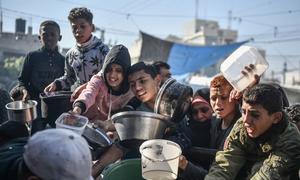
“‘Momma I want to eat’,” Asma said her children frequently cry to her, her oldest child just five. She told TNA they are skinny, eating less than half of what they used to before the war. During the past few days, their only meal has been just a half-piece of bread with a small slice of canned luncheon meat on top, she said.
They don’t have cooking gas and can’t afford to buy firewood, so Asma said her husband spends all day searching for wood, or other things to burn, so she can bake bread. Sometimes, Asma said, with such little heat, the bread takes hours to bake - and her children wait until nightfall for their first meal.
"They count down the hours until the bread is ready," she said.
'Starvation as a weapon of war'
Due to frequent aid stoppages and inspections by Israel, fuel shortages, and ongoing hostilities that have restricted safe movement, the desperately needed food aid to Gaza has only trickled in.
“We can only reach a fraction of the people who need help,” said Reem Nada, a regional communications officer for the World Food Program (WFP) based in Egypt.
Over the first 70 days of the war, only 10 percent of the food needed for Gaza’s entire population entered the enclave, according to the UN’s Office for the Coordination of Humanitarian Affairs (OCHA). Nada told TNA that since 7 October, just over 5,000 trucks have entered Gaza and only half were carrying food. She said this is the number of trucks that would have normally crossed into Gaza within 10 days.
Last week, there was only an average of about 120 trucks entering daily - far below the average of 500 trucks that used to enter each day before the war. In the two weeks since Asma and her family have been living in the Tel al-Sultan tent, she said they have just received two boxes of food aid, with three to four cans of tuna and canned meat, concentrated milk, tea, and a variety of condiments like salsa and ketchup, which she said are “useless”.
“In two days it [the food] is gone,” she said. “If we feed ourselves and the children together, of course, it’s not enough.”
A recent statement from Human Rights Watch (HRW) has accused the Israeli government of using starvation as a “weapon of war”.
Omar Shakir, HRW’s Israel and Palestine director, told TNA that the report analysed Israel’s apparent razing of agricultural land, destruction of civilian objects necessary for food production and survival (like bakeries), and statements from Israeli officials that “made clear the deprivation is not accidental”.
“When you put these things together, the conclusion was unmistakable that Israel is using starvation as a weapon of war, which is a war crime,” Shakir said.
Israeli blockade
Even before the war, food aid was entering Gaza at the whims of Israel’s approval. Israel has maintained a 16-year blockade of Gaza, supervising almost all commodities - from electricity and food to medicine - that can exit and enter the enclave. Half of Gaza’s population was already estimated to be facing acute food insecurity before 7 October, the HRW report cited.
Israel’s “total blockade” of Gaza on 9 October resulted in a week-long pause on water and a nearly three-week-long pause on humanitarian aid entering the enclave. Fuel was prevented from entering until 15 November, causing bakeries, hospitals, sewage pumping stations, and water desalination plants to shut down, HRW reported.
While the United States has pressed Israel to allow aid to continue into Gaza at the same levels observed during the ceasefire - which guaranteed about 200 aid trucks to enter daily - the aid is still entering at “grossly insufficient levels”, according to OCHA.
WFP’s Nada reiterated that there are still no imports entering Gaza, meaning the available goods left after nearly three months are extremely limited and are selling at exorbitant prices. This also means that nearly the entire population depends on the trucks of assistance just trickling into the Strip.
However, these trucks loaded with aid cargo are being held up for weeks at the Rafah or Kerem Shalom border crossings with Egypt, due to what Israel says are necessary inspections to prevent the items from being used by Hamas. This inspection process has been described as “cumbersome” and “arbitrary”, and is slowing the aid into Gaza, two US senators said after they visited the border.
Infectious disease rampant
Sitting beside Asma is her three-year-old son, Zain. While she speaks, his coughs continue steadily. Asma said Zain has had diarrhoea for days. “They tell me to go get medicine for him, but with what money?” she said.
Since 17 December, the number of children with diarrhoea has increased dramatically, with about 3,200 new cases of diarrhoea per day, UNICEF reported last week.
The young mother also said her children are “covered in skin rashes” she believes are from the unsanitary living conditions and lack of clean water. “I wash the same clothes over and over again, but still, everything is dirty,” she described.
The poor sanitation, cramped living conditions, and now colder months have created a breeding ground for infectious diseases, which WFP’s Nada said are spreading rapidly. For the millions suffering from severe hunger, the risk of getting sick is multiplied, with their immune systems too weak to fight off viruses and bacteria, Nada said.
Mohamed Salama, a doctor in the neonatal intensive care department at Gaza’s Emirate Crescent Hospital in Rafah, told TNA that he is treating an “alarming” number of cases of intestinal infections daily as a result of contaminated water and other parasites.
He noted a rise in cases of acute gastroenteritis (commonly known as the stomach flu) and rotavirus, an extremely contagious virus commonly caught by children. Both viruses cause vomiting and diarrhoea, which deplete the body of nutrients and fluids and can be deathly for those already suffering from malnutrition.
Salama said he does not have the proper medicines - like multivitamins, nutrient supplements, and oral rehydration solutions - to treat patients with severe cases of these viruses. He said a few infants have passed away in the hospital as a result of their weak immunity due to malnutrition.
The doctor said he also sees many pregnant women who arrive at the hospital showing symptoms of malnutrition, including severe fatigue, numbness in the extremities, loss of hair, and weight loss. Malnutrition during pregnancy can have detrimental effects on the mother and child, he said.
Malnourished pregnant women can be deficient in folic acid (found in foods rich in vitamin B), which can lead to severe birth defects of the baby’s brain and spine, he said. The condition is known as “neural tube defect” and often results in paralysis.
“Our fear is that after this war, we’ll see a lot of babies with these birth defects,” Salama stated. “Please, support us with medicines, food, electricity,” the doctor begged. “So we can help our patients. So we can do our job properly.”
'Israel has broken every rule in the book'
Asma said that when Zain, her sick son, begins crying from his pain and sickness, she sometimes takes him to a playground at a nearby school to try and lighten his mood. There, they see people selling sweets and Asma says she tells him that “one day, God willing, I will be able to buy you the sweets”.
However, Gaza’s economy has been devastated by the past months of fighting, and it will likely take months more even after hostilities cease to rebuild. The Strip’s farmland - a critical food and export source - has been ravaged by the Israeli war. The Palestinian Central Bureau of Statistics said that Gaza is suffering from at least a $1.6 million daily loss in farm production, as cited in the HRW report.
Israel has waged one of this century’s most destructive wars, destroying nearly 70 per cent of Gaza’s homes and over half of its buildings.
“The longer the conflict continues at the current kinetic levels, the more Gaza will inevitably become uninhabitable for many of the Palestinians there,” said Garber, the former USAID officer.
Israel has broken “every rule in the book” when it comes to humanitarian law, Osama al-Sharif, a Jordanian political analyst, told TNA. “Will there be an investigation into war crimes and crimes against humanity?” he asked. “If this is overlooked, then the whole rules-based international world order means nothing,” he added.
South Africa has launched a case at the UN’s top court alleging that Israel’s military campaign in Gaza amounts to genocide. A few other countries, mostly in South America and the Middle East, have cut ties with Israel due to its actions during the war.
But Israel is still receiving the logistic and diplomatic support of the US, who has continued to veto the desperately called-for humanitarian ceasefire.
For Asma, she said she has stopped watching the news. “Why? No one is looking out for us, no one is coming to help us,” she said.
“The UN are sitting on chairs and giving out roses,” she said angrily. “We don’t want these boxes of stupid food. We want to go back to our homes. We are tired.”
Author
Hanna Davis is a freelance journalist reporting on politics, foreign policy, and humanitarian affairs.
Gaza War Day 100: most significant stories from the onslaught so far
- Details
- Written by alib
- Category: MENA
- Hits: 595
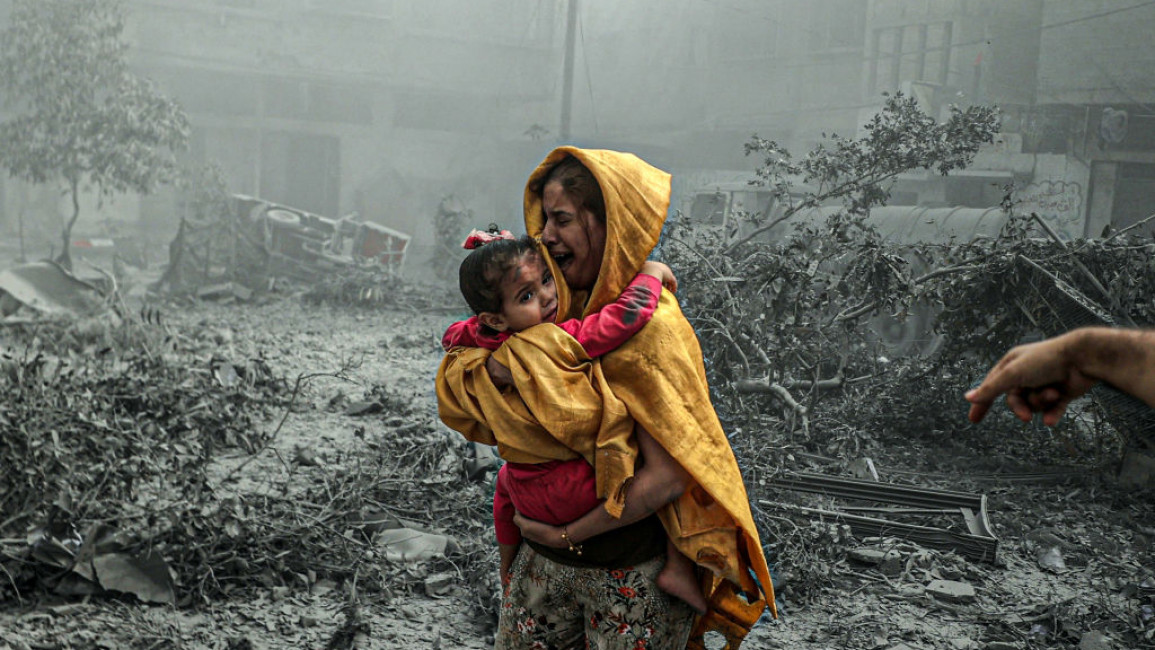
LONDON - Israel’s war on Gaza has hit another grim milestone - Day 100. The New Arab takes a look at some of the most significant events in Gaza in the past three months.
Sunday marks 100 days since Israel launched its unprecedentedly brutal war on Palestinians in the Gaza Strip.
Almost 24,000 people have been killed in Gaza in that time — that's more than one percent of its entire population.
More than 60,000 people have been injured, and close to the entirety of Gaza's population of 2.3 million have been displaced from their homes. Oxfam said earlier this week that more people are being killed in Gaza per day than we have seen in any "conflict" in the 21st century.
The New Arab takes a look at a few of the significant events relating to Gaza that have taken place in the past 100 days.
Hamas attack on Israel
Hamas's military wing launched an attack of unprecedented scale on Israel on 7 October: Operation Al-Aqsa Flood.
Surreal video from the Al-Qassam Brigades of paragliders taking off from Gaza to float across the border and attack Israel was soon circulating worldwide. Palestinians penned into Gaza for some 16 years poured out of holes bulldozed out of a heavily fortified border into modern-day Israel, or historic Palestine.
Palestinian fighters attacked three sites close to the Gaza-Israel border - the Beeri and Kfar Azza kibbutzes, and the Nova music festival.
Estimates for the number of Israeli and foreigners killed in the attack have fluctuated, but they currently sit at around 1,100 people. More than 200 others were taken by the fighters back to Gaza as hostages.
Growing evidence has also emerged that Israel may have killed a number of its own people on October 7, including by helicopter missile fire and tank shells shot into homes where Palestinian fighters were holed up with hostages. This includes the testimonies of Israeli soldiers who served and commanded on the day, as well as those of survivors.
Israelis and others were left astounded as to how these fighters could commit so deadly an attack, and penetrate such a heavily surveilled and fortified border.
It would later emerge that Israeli military and intelligence had committed many security failings. Netanyahu had reportedly been warned on a few occasions that Hamas or other groups could soon commit a large-scale attack on Israel, but these warnings were ignored.
While war on Palestinians has proven popular among Israelis, their military's failure to bring home the hostages in Gaza has been a major political thorn in the side of a Netanyahu government, already unpopular for its handling of domestic issues prior to 7 October, including a judicial overhaul.
'Beheaded babies'
Israel responded to the 7 October attack quickly and intensively, renewing its bombing Gaza City and the rest of northern Gaza.
Soon after the attack on Kfar Azza, the Israeli military paraded foreign press around the site, while preventing foreign media workers from reporting from Gaza.
Without proof, an Israeli military officer told journalists that Hamas had beheaded 40 babies during the attack - a claim parroted by reporters from some of the world's biggest news organisations without verification.
Some journalists disputed the claim, and Hamas denied it; some journalists apologised for or retracted their reports, saying that they should not have been published or aired without verification.
This did not stop US President Joe Biden from claiming that he personally had seen photos of beheaded babies, proof of "terrorists beheading children".
The claim has widely been dismissed, but the damage had already been done in the minds of publics worldwide who were relying on prestigious news outlets to explain to what has happening in Israel and in Gaza to them.
It was an early example of how Israel would use disinformation and misinformation to inflate the level of violence Hamas's attack and detract from its own war crimes in Gaza.
Al-Ahli "Baptist" Hospital strike
Just ten days into the war, we saw horrifying loss at a hospital in Gaza City.
Almost 500 people were killed in a strike on the Al-Ahli "Baptist" Hospital on 17 October.
Thousands had been taking shelter at the hospital after losing their homes in Israeli bombardment. Others were at the hospital being treated for injuries they had suffered in the strikes. Bombing a is hospital considered a war crime under international law.
sraeli deflection tactics struck once again. Israel claimed Palestinian militants had misfired and accidentally fired at the hospital. They released audio and video clips of highly questionable authenticity that they said backed up their claim.
Again, Israel's allies including Biden, said that they believed Israel's claims about the hospital strike.
Once the army invaded the hospital, no evidence of a Hamas command and control centre was presented, nor were any captives or fighters found.
Again, Israel got away with a brutal act with impunity, and has since struck other hospitals, refugee camps, places of worship, and schools.
Temporary ceasefire
Israel was relentless in its strikes, forcing much of the population south. People were not even able to evacuate when ordered to do so by Israel.
Aid was only being allowed in in trickles, and the constant airstrikes meant that the little aid that was getting in was not getting where it was most needed.
Meanwhile, Israelis were growing increasingly frustrated about the hostages still trapped in Gaza.
Outraged people worldwide were calling for an immediate and permanent ceasefire to bring an end to the seemingly endless suffering we were seeing, but Western politicians opposed this.
Finally, after six weeks of the onslaught some kind of respite came in the form of a four-day truce between Israel and Hamas that had been meditated by Qatar.
As part of the truce, Hamas was to release some of the hostages in exchange for Israel releasing Palestinians held in its prisons.
More than 100 hostages were released, and over 300 Palestinian prisoners.
The truce was extended for a few days, and there was hope that a more permanent deal could be reached, but this was quickly snuffed out. By 1 December, Israel was back to pounding Gaza.
South Africa files at the ICJ
As Israel returned to bombing Gaza with new fervour, Palestinians were left with the feeling that they had been abandoned by the rest of the world.
Israel has been committing field executions, stealing bodies from mass graves, sniping at churchgoers, and torturing journalists in their captivity, to name but a few crimes.
South Africa has had a long history of solidarity with Palestine, and that's been the case since Israel launched its war too. It pulled its diplomatic staff from Israel, and there have been huge protests in South African cities urging not only for an immediate ceasefire, but a free Palestine.
South Africa pulled its most emphatic move while most of the rest of the world embraced its usual end-of-year lethargy. On 29 December, they announced that they had filed a case with the International Court of Justice (ICJ), accusing Israel of committing genocide against the Palestinian people, particularly in Gaza.
There were emotional scenes from the West Bank, where Palestinians convened at a statue of late South African freedom fighter and formmer president Nelson Mandela on the eve of the case.
Not much new was said in South Africa's hearing, but that it was being heard at a world court and with a global audience was deeply moving to many, and felt like an inching towards justice.
Israel has of course denied that it is committing genocide, saying that it is trying to eradicate not a people, but a particular organisation that has genocidal intent against Israelis.
An ICJ ruling that Israel is indeed committing genocide is symbolic, and Israel could also ignore any ruling the ICJ makes against it, including one for an immediate ceasefire.
But that South Africa brought the case to an international court shows that not all are willing to sit and watch a genocide happen, and a reminder to Palestinians, especially those in Gaza, that they are not alone.
Even so, Israel is continuing to strike Gaza and kill its inhabitants, and it is still unclear what awaits the millions of people crammed into ever-shrinking "safe areas".
Could they be expelled from Palestine altogether? Will they be killed by strikes, or starve in an increasingly acute humanitarian crisis? Or will the world's most powerful finally act to stop Israel and its onslaught?
Hearings began at The Hague in case claiming Israel’s Gaza war is genocide
- Details
- Written by alib
- Category: MENA
- Hits: 678
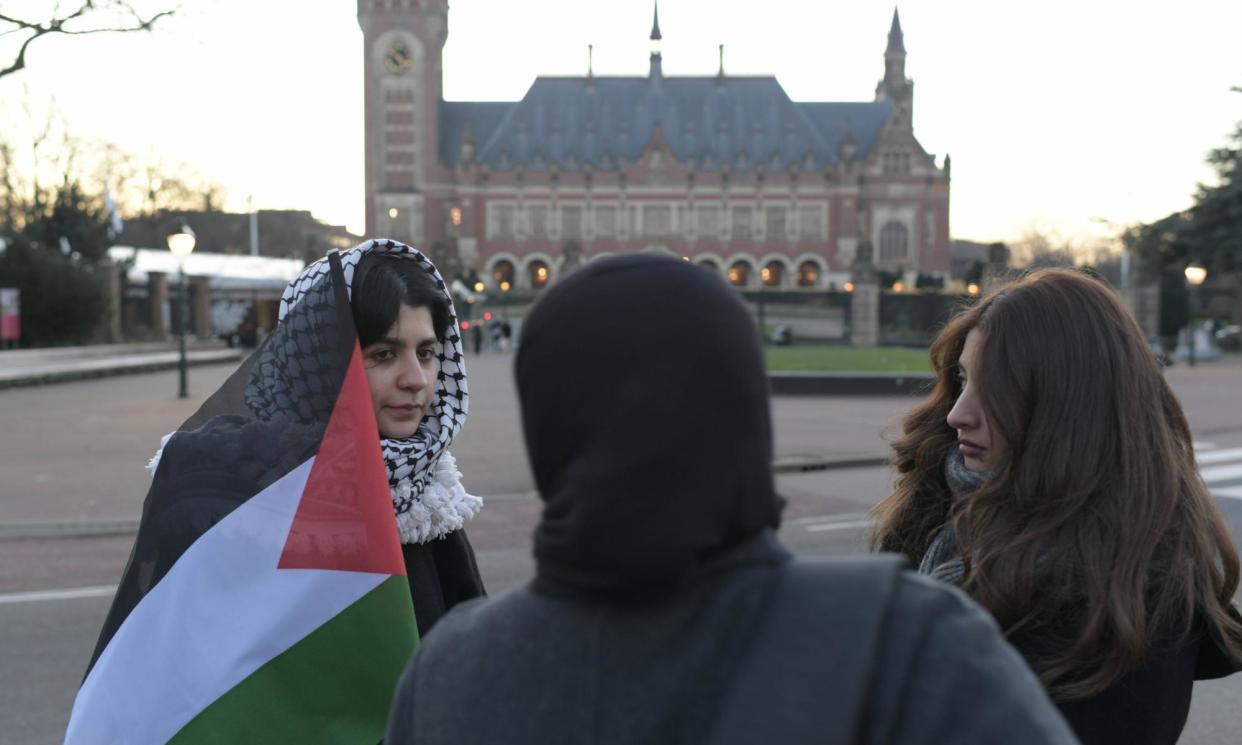
THE HAGUE - A legal hearing into the war in Gaza opens in The Hague on Thursday as the international court of justice (ICJ) hears arguments alleging that Israel is committing genocide in the territory.
South Africa, which has brought the case, is asking the UN court to act urgently “to protect against further, severe and irreparable harm to the rights of the Palestinian people under the genocide convention, which continues to be violated with impunity”.
It comes as the assault on Gaza – launched in response to the 7 October attacks on Israel by Hamas in which militants killed 1,200 people, mainly civilians, and took 240 people hostage – continues to wreak a devastating toll.
Since the 7 October attacks, Israel has killed more than 23,000 Palestinians in Gaza, according to Gaza’s health ministry, about 70% of whom are believed to be women or children. The UN’s Palestinian relief agency, UNRWA, has estimated that 1.9 million people have been internally displaced by the war in Gaza – nearly 85% of the population – while tens of thousands of buildings have been destroyed.
In its 84-page written application to the ICJ to open proceedings, South Africa said: “The acts and omissions by Israel complained of by South Africa are genocidal in character because they are intended to bring about the destruction of a substantial part of the Palestinian national, racial and ethnical group.”
Genocide cases, which are notoriously hard to prove, can take years to resolve, but South Africa is asking the court to speedily implement “provisional measures” and “order Israel to cease killing and causing serious mental and bodily harm to Palestinian people in Gaza”. The filing also says Israel should cease deliberately inflicting conditions calculated to bring about the destruction of the Palestinians as a group, be ordered to prevent and punish incitement to genocide, and halt restrictions on aid as well as evacuation directives.
Israel reacted furiously when the application was made, calling it “baseless” and a “blood libel”. It says it is acting in self-defence, to protect Israelis by destroying Hamas. The country’s biggest supporter, the US, has dismissed the case as “meritless”.
Ahead of the case, Israeli prime minister Benjamin Netanyahu posted a video clip saying Israel was fighting Hamas, not the Palestinian population, and was acting in full compliance with international law. “Israel has no intention of permanently occupying Gaza or displacing its civilian population,” he said.
Outside the court, both sides will also attempt to win the battle of public opinion. Israel is holding a series of events in The Hague, including a peace march on Thursday morning as South Africa prepares to state its case, exhibitions about the Israeli hostages still held by Hamas, and interviews with the relatives of hostages.
South Africa said on Wednesday that its delegation will include the former UK Labour party leader Jeremy Corbyn, who is a longtime supporter of the Palestinian cause but whose time as opposition leader was marred by antisemitism allegations.
South Africa’s ruling African National Congress (ANC) party has a long history of comparing Israel’s treatment of Palestinians with that of black South Africans under apartheid.
The Organisation of Islamic Cooperation, which has 57 member states, has welcomed South Africa bringing the case, while individual countries have also expressed support. Belgium’s deputy prime minister, Petra De Sutter, tweeted that she wanted her country “to take action at the International Court of Justice, following the lead of South Africa”.
Both sides’ legal teams will have the same time to make their case – approximately three hours – with South Africa going first on Thursday and then Israel responding on Friday. Judgment will be reserved until a later date, but could come within weeks.
The genocide convention, drawn up in 1948 after the second world war and the murder of 6 million Jews in the Holocaust, describes the crime as “acts committed with intent to destroy, in whole, or in part, a national, ethnical, racial or religious group”. The acts include killing members of the group or causing them serious bodily or mental harm,
The Hague cannot enforce its decisions and it is possible that Israel could ignore an adverse judgment, but that would only fuel further international condemnation of its military campaign.
Israeli strike kills an elite Hezbollah commander
- Details
- Written by alib
- Category: MENA
- Hits: 545
BEIRUT - An Israeli airstrike killed an elite Hezbollah commander in southern Lebanon on Monday, the latest in an escalating exchange of strikes along the border that have raised fears of another Mideast war even as the fighting in Gaza exacts a mounting toll on civilians.
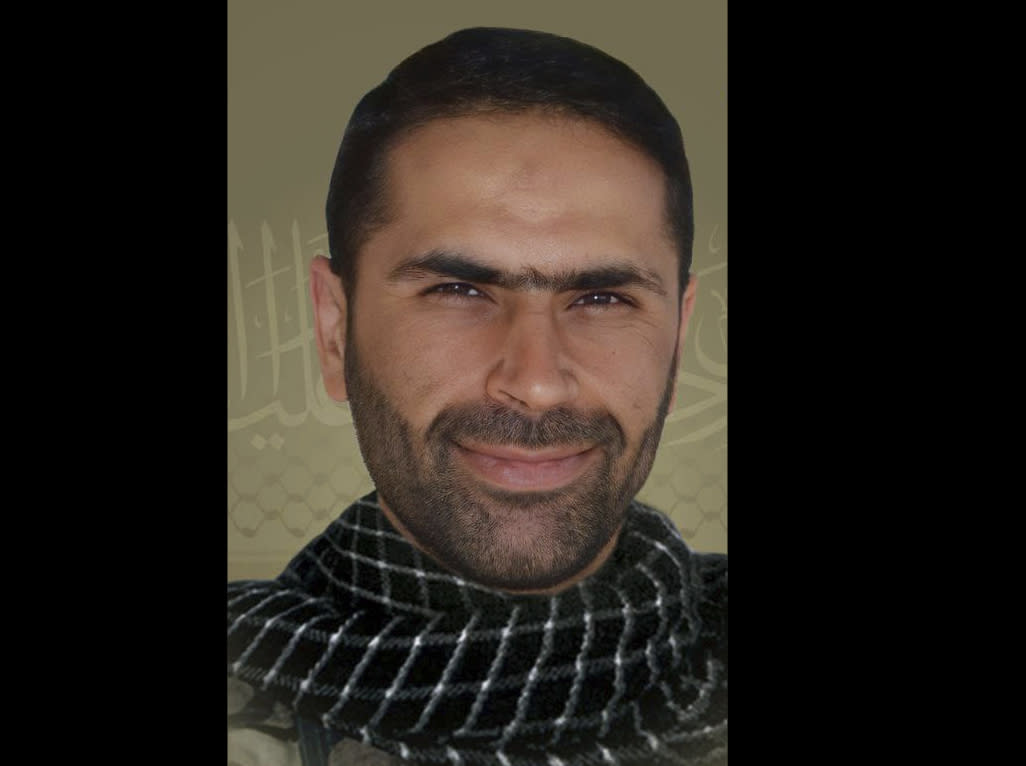
The strike on an SUV killed a commander in a secretive Hezbollah force that operates along the border, according to a Lebanese security official, who spoke on condition of anonymity according to regulations. Hezbollah identified the slain fighter as Wissam al-Tawil without providing details.
He is the most senior militant in the armed group to have been killed since Hamas' Oct. 7 attack into southern Israel triggered all-out war in Gaza and lower-intensity fighting between Israel and Hezbollah, which has escalated since an Israeli strike killed a senior Hamas leader in Beirut last week.
U.S. Secretary of State Antony Blinken, who is back in the region this week, appears to be trying to head off a wider conflict.
Israel says it has largely wrapped up major operations in northern Gaza and is now focusing on the central region and the southern city of Khan Younis. Israeli officials have said the fighting will continue for many more months as the army seeks to dismantle Hamas and return scores of hostages taken during the militant group's Oct. 7 attack that triggered the war.
The offensive has already killed over 23,000 Palestinians, civilians and combatants, devastated vast swaths of the Gaza Strip, displaced nearly 85% of its population of 2.3 million and left a quarter of its residents facing starvation.
'SICKENING SCENES' IN GAZA'S OVERWHELMED HOSPITALS
Medics, patients and displaced people fled from the main hospital in central Gaza as the fighting drew closer, witnesses said Monday. Losing the facility would be another major blow to a health system shattered by three months of war.
Doctors Without Borders and other aid groups withdrew from Al-Aqsa Martyrs Hospital in Deir al-Balah in recent days, saying it was too dangerous. That spread panic among people sheltering there, causing many to join the hundreds of thousands who have fled to the south of the besieged territory.
Tens of thousands of people have sought shelter in Gaza's hospitals, which are also struggling to treat dozens of people wounded each day in Israeli strikes. Only 13 of Gaza's 36 hospitals are even partially functioning, according to the U.N. humanitarian office.
Omar al-Darawi, an employee at Al-Aqsa Martyrs Hospital, said the facility has been struck multiple times in recent days. He said thousands of people left after the aid groups pulled out, and that patients have been concentrated on one floor so the remaining doctors can tend to them more easily.
“We have large numbers of wounded who can’t move” he said. “They need special care, which is unavailable.”
More dead and wounded arrive each day as Israeli forces advance in central Gaza following heavy airstrikes. Gaza’s Health Ministry said Monday that 249 Palestinians have been killed and 510 others were wounded across the territory in the last 24 hours.
World Health Organization staff who visited Sunday saw “sickening scenes of people of all ages being treated on blood-streaked floors and in chaotic corridors,” Tedros Adhanom Ghebreyesus, the head of the U.N. agency, said in a statement. “The bloodbath in Gaza must end.”
DIRE CONDITIONS IN THE ISOLATED NORTH
The situation is even more dire in northern Gaza, which Israeli forces cut off from the rest of the territory in late October.
Entire neighbourhoods have been demolished, and hundreds of thousands of people have fled, while those who remain face severe shortages of food and water. The WHO said late Sunday it has not been able to deliver supplies to northern Gaza in 12 days.
Even there, Israel is still battling what it describes as pockets of militants.
An airstrike early Sunday flattened a four-story home filled with displaced people in the urban Jabaliya refugee camp, killing at least 70, including women and children, according to Mahmoud Bassal, a spokesman for Gaza's civil defense. There was no immediate confirmation from the Health Ministry, which has struggled to maintain its operations in the north.
Search efforts were still underway on Monday. The civil defense circulated a graphic video showing the aftermath of attack, with several bodies scattered among the rubble.
Jabaliya, which was built for Palestinian refugees from the 1948 war surrounding Israel's creation and is now a dense, built-up neighborhood, has seen weeks of heavy fighting.
More than 23,000 Palestinians have been killed, and more than 58,000 wounded, since the war began, according to the Health Ministry in Hamas-run Gaza. The death toll does not distinguish between combatants and civilians. Health officials say about two-thirds of those killed have been women and minors.
Israel blames Hamas for civilian casualties because the group operates in heavily populated residential areas, but the military rarely comments on individual strikes. The military says it has killed some 8,000 militants, without providing evidence, and that 176 of its own soldiers have been killed in the offensive.
SEEKING TO HEAD OFF A WIDER WAR
Blinken, who met with the leaders of Jordan and Qatar on Sunday, once again spoke of the need for Israel to adjust its military operations to minimize harm to civilians and allow more aid into the territory.
But his main focus appeared to be preventing the war from spreading.
A Hezbollah rocket barrage hit a sensitive air traffic base in northern Israel on Saturday in one of the biggest attacks in three months of low-intensity fighting along the border. The militant group said was an “initial response” to the killing of Hamas' deputy political leader Saleh Arouri in Beirut last week.
Israel has mostly sought to limit the fighting in its north, but its leaders say their patience is wearing thin, and that if the tensions cannot be resolved through diplomacy, they are prepared to go to war. They have expressed particular concern about the Radwan Force, the elite Hezbollah unit in which al-Tawil was a commander, which operates along the border.
Hezbollah began firing rockets shortly after Hamas' Oct. 7 attack ignited the war. Hamas and other militants killed about 1,200 people in southern Israel that day, mostly civilians, and took some 250 people hostage, over 100 of whom were released during a cease-fire in November.
Hezbollah has said its attacks, which have driven tens of thousands of Israelis from their homes, aim to ease pressure on Gaza. But the group appears wary of risking an all-out war that would bring massive destruction to Lebanon.
Main News
Error: No articles to display
latest news
- New blood test can spot breast cancer at earliest stages, scientists
- Sole bidders Saudi Arabia confirmed as hosts of 2034 men’s World Cup
- Nagasaki survivor accepts Nobel Peace Prize, calls for nuclear free world
- Countering Collapse in Haiti
- Crude oil price and production movements, OPEC
- IFAD, Nepal launch $120 million programme to help over 250,000 people
- DiEM25 challenges EU’s inhumane practices towards migrants
- Malibu wildfires forced thousands to evacuate their homes
- DRC: Senior army officials must be investigated for possible crimes
- Netanyahu describes corruption charges against him as ‘ocean of absurdity’ at trial
- Authorities disrupt migrant smuggling supply chain
- Israeli tanks '16 miles from Damascus' as overnight raids 'destroy Assad army's assets'
- In Haiti, women suffer the consequences of gang violence
- ICC arrest warrants for top Israeli officials are step toward justice
- Poland: Brutal Pushbacks at Belarus Border
- Sudan: War Crimes in South Cordovan, HRW
- Europeans politicians quick to promote hate against Syrian refugees
- Pentagon announces $988 million Ukraine Security Assistance package
- Trump says Russia, Iran in 'weakened state,' calls on Putin to make Ukraine deal
- $1.7 billion in airline funds blocked by governments
- 12 Ways to improve circulation for healthy blood flow, Doctors
- Action against ‘phone phishing’ gang in Belgium, Netherlands: 8 arrests
- $282 million program targeting agriculture and food systems
- What’s happening in Syria? The key developments as Assad flees to Russia
- UK nearly as divided as the US, report finds
Europe
DiEM25 challenges EU’s inhumane practices towards migrants
Authorities disrupt migrant smuggling supply chain
ICC arrest warrants for top Israeli officials are step toward justice
Poland: Brutal Pushbacks at Belarus Border
Europeans politicians quick to promote hate against Syrian refugees
Action against ‘phone phishing’ gang in Belgium, Netherlands: 8 arrests
UK nearly as divided as the US, report finds
Starmer rejects choice between EU and US allies
French government at risk of collapsing over 2025 budget
Belgium convicted of crimes against humanity for acts committed during colonisation
23rd International Economic Forum on Africa Monday 9 December
Putin Approves New Budget With Record Defence Spending
UK MPs back Assisted dying bill after emotionally-charged Commons debate
Ireland goes to polls with three parties neck and neck
Putin full of praise for ‘intelligent and experienced’ Trump
UK to continue selling arms to Israel despite Lebanon ceasefire, Starmer says
Crackdown on illegal streaming network with 22 million users worldwide
France says Israel's Netanyahu has immunity from ICC arrest warrant
Number of Europeans diagnosed with HIV rose in 2023 with new cases in most countries
Georgian prime minister suspends EU membership talks until end of 2028
Russian missile fired at Ukraine carried warheads without explosives
Russia advances in Ukraine at fastest monthly pace since start of war
Why are news outlets not covering crackdown on pro-Palestinian journalists in UK?
Starmer and Lammy are ‘monstrous war criminals’, Palestinian lawyer
Storm Bert brings severe flooding across UK
Asia
Nagasaki survivor accepts Nobel Peace Prize, calls for nuclear free world
IFAD, Nepal launch $120 million programme to help over 250,000 people
Embezzling property tycoon scrambles to raise $9bn to avoid death sentence
Pakistan: Everything we know about clashes between Imran Khan supporters and police
India: Mosque survey dispute erupts into deadly clashes
Taliban detained journalists over 250 times since takeover, UN
Philippines summons VP Duterte over threat to have Marcos killed
Four troops killed in Pakistan as protesters demand release of ex-PM Khan
Thousands of Imran Khan supporters defy arrest to head to capital
Pakistan sealing off capital ahead of planned rally by Imran Khan supporters
Fighting between armed sectarian groups in Pakistan kills at least 33 people
Rise in Afghan opium cultivation reflects economic hardship
Volcano erupts in Bali spewing five-mile ash cloud
New Delhi becomes world’s most polluted city as AQI levels reach 1,000
Pakistan’s toxic smog cover is now visible from space
Chinese driver 'angry about divorce settlement' ploughs into crowd leaving 35 dead
Taliban to attend UN climate conference for first time
Suicide bomber kills 24 in explosion at Pakistan train station
China unveils new heavy rocket that looks similar to SpaceX Starship
North Korea’s new ICBM missile records longest flight time yet
Japanese youth committed to fight poverty and hunger with IFAD
Japan's government in flux after election gives no party majority
Indan Muslims face discrimination after restaurants forced to display workers’ names
IFAD and Thailand sign agreement for new regional office in Bangkok
Nobel Peace Prize was awarded to the Japanese organization Nihon Hidankyo
Africa
DRC: Senior army officials must be investigated for possible crimes
Sudan: War Crimes in South Cordovan, HRW
Angola: US President Biden must demand immediate release of five critics
Wife of 'abducted' Ugandan opposition figure says he won't get justice
S.Africa opposition seeks to revive impeachment proceedings against Ramaphosa
Namibia may elect its first-ever female president in elections this week
Botswana turns to cannabis as diamonds are’s for ever
Influencers and social media beat mainstream media in Kenya
Mali’s ruling military appoints new prime minister
Regenerative Agriculture and Peace-building in South-central Somalia
Wits University unveils pan-African AI centre
'The UK will never forget Sudan,' says David Lammy
Sudan’s displaced have endured ‘unimaginable suffering, brutal atrocities’
Nearly half the world’s 1.1 billion poor live in conflict settings
Sudan war deaths are likely much higher than recorded
Africa’s mineral deposits can power the energy transition
The joint force of the AES ready to launch large-scale operations to secure Sahel
Mystery still surrounds death of revered UN chief Hammarskjöld, 63 years after plane crash
IFAD and Sierra Leone partner to boost farm productivity
Mozambique: End violent post-election crackdown ahead of 7 November Maputo march
Africa: Richer countries must commit to pay at COP29
Sudan’s ‘living nightmare’ continues as 11 million flee war
‘Alarming’ situation in Great Lakes Region of DR Congo
Climate change worsened rains in flood-hit African regions, scientists
African progress backslides as coups and war persist
Americas
Countering Collapse in Haiti
Malibu wildfires forced thousands to evacuate their homes
In Haiti, women suffer the consequences of gang violence
Pentagon announces $988 million Ukraine Security Assistance package
Trump says Russia, Iran in 'weakened state,' calls on Putin to make Ukraine deal
Musk dealt legal defeat in battle over $56 billion Tesla pay deal
Autonomous Systems Impact on Modern Warfare
US, Israel, China, and the Shifting Arms Trade in the Middle East
Support the Court, HRW
Private prisons in US stand to cash in from Trump’s mass deportation plan
G7 Foreign Ministers’ Meeting Statement
War Crimes Weapons: Made in the USA
Trump Cabinet and executive branch of different ideas and eclectic personalities
Trump Says He Will Impose 25% Tariff on Canada and Mexico on Day one
Prosecutors drop election interference and documents cases against Trump
Number of children recruited by gangs in Haiti soars by 70%, UNICEF
Archaeologists discover 4,000-year-old canals used to fish by predecessors of ancient Maya
Democrats in Congress urge Biden to sanction Israelis over West Bank violence
Susan Sarandon opens up on exile from Hollywood after PRO-Palestine remarks
What could Trump’s election win mean for Ukraine and the Middle East
Trump deploys garbage truck to trash Biden gaffe at Wisconsin rally
US calls on Israel to tackle ‘catastrophic humanitarian crisis’ in Gaza
Vinicius's Ballon d’Or snub sparks fury in Brazil amid claims of racism
CNN guest thrown off air after telling Mehdi Hasan:‘I hope your beeper doesn’t go off’
Pentagon warns North Korea as 10,000 troops set to join Russia’s war
Australia & Pacific
Australia passes world-first ban on social media for under 16s into law
New Zealanders save over 30 stranded whales by lifting them on sheets
Commonwealth leaders say 'time has come' for discussion on slavery reparations
Generational export reforms to boost AUKUS trade and collaboration
Australia lawmaker calls opposition leader racist over opposition to Gaza refugees
Agreement strengthens AUKUS submarine partnership
Passionate welcome for WikiLeaks founder Assange as he lands in Australia
Violent protests return to New Caledonia as pro-independence leader extradited
EU and Australia accelerate their digital cooperation
Over 2,000 people thought to have been buried alive in Papua New Guinea landslide
Over 670 people died in a massive Papua New Guinea landslide, UN
Macron says extra security to stay in riot-hit New Caledonia as long as needed
New Caledonia riots: Tourists evacuated, President Macron to visit
Hundreds more French police start deploying to secure New Caledonia
France declares state of emergency in New Caledonia as protests rage
Australia’s 2024 National Defence Strategy
Sydney rocked by second mass stabbing as knifeman attacks bishop
Three dead, 1,000 homes destroyed in Papua New Guinea quake
Australia and UK sign defense and security treaty
Australia tightens student visa rules as migration hits record high
Global food crisis and the effects of climate change need urgent action, IFAD
Indonesia, Australia to sign defence pact within months
Australia to ban doxxing after pro-Palestinians publish information about hundreds of Jews
Australia launches inquiry into why Cabinet documents relating to Iraq war remain secret
Australia says AI will help track Chinese submarines under new Aukus plan
MENA
Netanyahu describes corruption charges against him as ‘ocean of absurdity’ at trial
Israeli tanks '16 miles from Damascus' as overnight raids 'destroy Assad army's assets'
What’s happening in Syria? The key developments as Assad flees to Russia
Who is Abu Mohammed al-Golani, leader of insurgency that toppled Syria’s Assad?
Syrian leader Bashar Assad in Moscow, State news agency
IFAD and Kuwait agree to strengthen efforts to support small-scale farmers
Israel responds to Hezbollah rocket attack with airstrikes on south Lebanon
Egypt: Education Restricted for Refugee
At least 25 killed in counter air strikes by Syrian army on rebels in north-west
UNRWA suspends aid delivery to Gaza after lorries looted at gunpoint
Who are the Syrian rebels HTS and why are they advancing?
Syrian rebels capture centre of Aleppo in major blow to Assad regime
World Central Kitchen stops work in Gaza after three aid workers killed by Israeli strike
Lebanon must elect president during 60-day truce with Israel as part of ceasefire
Abbas clarifies PA presidency succession plan but experts unconvinced
At least 10 killed in Israeli air strike on Beit Lahia
UN calls for accountability and investigations in Israel-Hezbollah conflict
Saudi Arabia approves 2025 budget with estimated $315bn
Lebanon faces $25bn reconstruction bill after Israel-Hezbollah ceasefire
Israeli military to remain in Gaza for years, food minister says
Israeli government orders officials to boycott left-leaning paper Haaretz
In East Jerusalem, record number of homes destroyed to drive out Palestinian residents
Biden: Israel and Hezbollah Ceasefire deal can be blueprint to end Gaza war
Heavy rain and high waves wash away tents of Gaza's displaced
Saudi NEOM gigaproject a 'generational investment,' minister
Banners



Videos
-
Future of car-plane, see it to believe it
https://www.youtube.com/watch?v=D4uSWtazRCM
-
Mehdi Hasan: Islam is a peaceful religion
https://www.youtube.com/watch?v=Jy9tNyp03M0 -
Python swallows antelope whole in under an hour
https://www.youtube.com/watch?v=x0rk5zh7RaE
-
Sangoku dance
http://www.youtube.com/watch?v=Df1SkeiPEAo -
flying 3 kites wonder!
https://www.youtube.com/watch?v=nr9KrqN_lIg
-
Korea has talent
http://www.youtube.com/watch?v=tZ46Ot4_lLo&feature=related -
Paul Potts sings Nessun Dorma
http://www.youtube.com/watch?v=1k08yxu57NA
-
Susan Boyle - Britain's Got Talent
http://www.youtube.com/watch?v=RxPZh4AnWyk -
Twist and Pulse - Britain's Got Talent
http://www.youtube.com/watch?v=1RDiBxbT_CA -
Shaheen Jafargholi (HQ) Britain's Got Talent
http://www.youtube.com/watch?v=VYDM3MIzEHo
High-Quality clip of 12-year-old singer Shaheen Jafargholi auditioning on Britain's Got Talent 2009. First he sings Valerie by The Zutons, as performed by Amy Winehouse, but, after Simon interrupts him and asks for a different song, he just blew everyone away. -
David Calvo juggles and solves Rubik's Cubes
http://www.youtube.com/watch?v=lhkzgjOKeLs
-
Outdoor 'bubble pod' hotel unveiled
http://www.youtube.com/watch?v=9IPBKlWf-cA