
Home
No Escape: A gut-wrenching account of China's purge, genocide of the Uyghur people
- Details
- Written by northsouth
- Category: Asia
- Hits: 1058
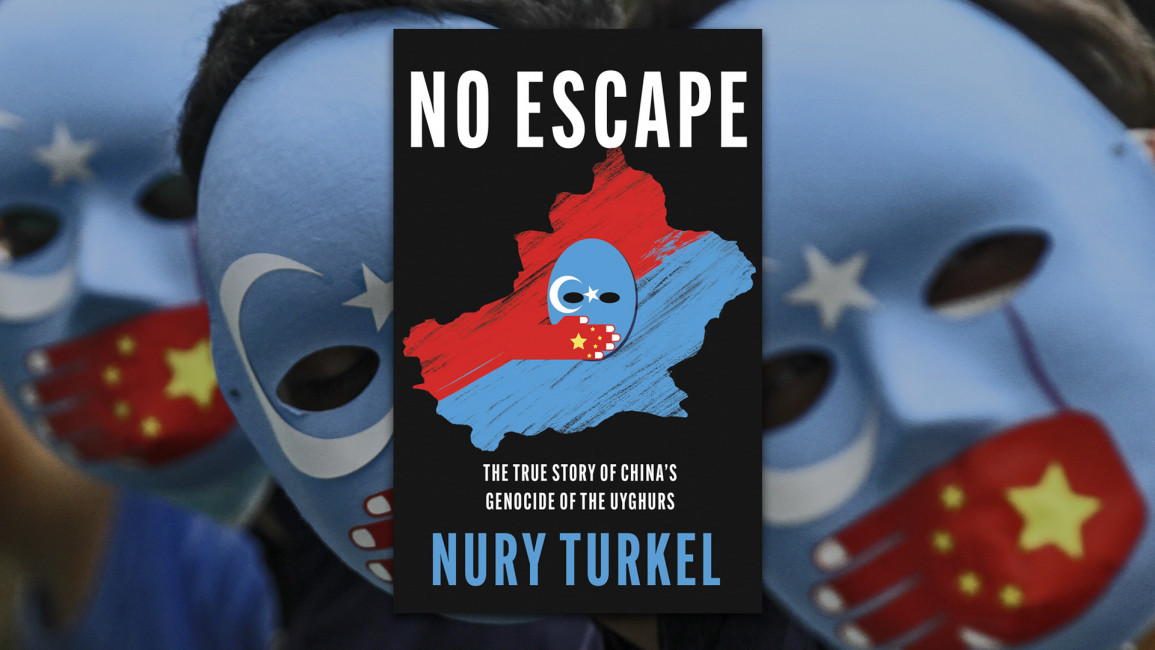
NEW YORK - No Escape is a shocking and stirring account of China's systematic persecution and genocide against the Uyghur minority reported by the Uyghur-American attorney Nury Turkel's autobiography recounts, in graphic detail, the atrocities committed by the Chinese Communist Party against Uyghurs in Xinjiang, with his memoir an emotive plea to the world to recognise the genocide.
How did she want to die? Firing squad, lethal injection or the noose?
Mihrigul Tursun was issued with an orange uniform, the colour of a death row inmate, and told she would be executed within the month. She should choose carefully because each bullet would cost her parents $100 a piece.
Camp survivor Mihrigul's testimony is just one of the many harrowing tales woven into the autobiography of Uyghur-American attorney, Nury Turkel, whose inauspicious birth fifty-two years ago in a Chinese Cultural Revolution labour camp set the course of his life unwittingly on a trajectory which would see him rise to become one of Time Magazine's 100 most influential men.
The horrifying memoir, No Escape, The True Story of China's Genocide of the Uyghurs, traces the author's tortured beginnings from the time his 19-year-old mother, five months pregnant with her first child was sent away as punishment for her "intoxication with separatist ideology."
For five months after his birth between flag raising at dawn and singing songs in praise of Mao, the young mother would cry in pain trying to give her severely malnourished child the milk she never had.
Some fifty years have passed since the Mao purges ended, but Turkel paints an equally bleak picture of life today for his people under Xi Jinping.
Far from being just another account of the already well-documented atrocities taking place in the Uyghur heartland, his book delves deeply into the historical and socio-political context of East Turkestan (the Uyghur exiles' preferred title for Xinjiang) and the Turkic peoples who have laid claim to it since time immemorial.
He challenges the world to make sense of what the New Statesman has described as perhaps the "largest mass incarceration since the Holocaust" and warns of a future in which an unbridled and ambitious China's lack of accountability remains unchecked on the world stage.
Authentic stories of ordinary Uyghurs caught up in the sweeping purges and mass atrocities across the region, bring vivid colour to the evidence gleaned meticulously by Adrian Zenz, Shawn Zhang, and scores of academics around the world. No Escape paints a broad and shocking picture of the events in Xinjiang that Beijing from the word "go" has vehemently denied.
A short-lived renaissance enjoyed by his people in the 1980s where culture and religion were allowed to flourish, came to an abrupt halt following the collapse of Soviet rule in Eastern Europe, the fall of the Berlin Wall and the subsequent crackdown and slaughter of unarmed Chinese students in China's Tiananmen Square in 1989.
At 25, Turkel decided it was too dangerous to stay and started the process of trying to reach the States to continue his education. In 1995 he bade what turned out to be a final farewell to China.
His decision to eventually apply for asylum in 1997 following a further massacre of Uyghur students in his father's home town of Ghulja, proved to be a major turning point in his life when he resolved to become a human rights lawyer.
Turkel's life since leaving his homeland has been inextricably bound up with the suffering of his people. Sleepless nights, thoughts plagued with the whereabouts of his family, the health of his ageing parents and outrage at the corralling of at least a million of his compatriots into so-called "re-education camps" trouble him relentlessly.
Helpless, he has monitored the roundups from a distance. He has witnessed thousands of mosques vanish from Google Earth and the construction of hundreds of camps and forced labour factories from satellite images.
As the telephone lines have gone silent, and friends in the homeland deleted him from social media, he observed as his land became a vast open prison. Police stations, checkpoints and surveillance cameras have appeared in their tens of thousands to monitor phones, facial expressions, irises, a person's gait, and the day-to-day comings and goings of all those still at large.
Reports of compulsory health checks deeply disturbed him, biometric testing and the potential for sexual abuse during the monitoring of every Uyghur home with an unbridled army of so-called Han Chinese "relatives" billeted to spy on their every move unnerved him as he thought of his mother.
As he pieced together the clampdowns, the disappearances and the incremental erosion of Uyghur culture, religion and traditional life, Turkel became inconsolable, but meeting camp survivors in person was a shock for which he was unprepared.
The slow trickle of former detainees, mainly Kazakhs and Uzbeks confirmed everything the academics had gleaned. But there was more. These eyewitnesses who had experienced brutality first-hand, the torture, the senseless deaths and the privations of day-to-day life in the camps, away from the manipulated glare of western media were broken almost beyond repair.
"These Uyghurs die hard, don’t they? Just like when you pour boiling water on lice they refuse to die."
Qelbinur Sedik overheard these words after class, spoken to provoke and test her reaction. She managed to stay calm. As a Chinese teacher, she had been drafted in to teach Mandarin to a roomful of bedraggled elderly farmers in shackles. Her heart broke every day.
Days were full of fetid classrooms from which young girls were removed to be abused, and evenings after work, fending off the lecherous advances of a Chinese official assigned to her home, whom she dared not challenge.
Sayragul Sauytbay and 200 other inmates were forced to witness unflinchingly the gang rape of a young girl in its most brutal form to prove the success of CCP brainwashing methods, and the new mother of triplets, Mihrigul Tursun was abducted, cuffed, hooded and strapped into an immobilising "Tiger Chair" before days of gratuitous beatings, electric shocks and interrogation. When she was released two months later one of her babies was returned to her dead.
Life in the camps was brutal. The eyewitness accounts make grim reading but add weight to the proofs that prompted first America and then other countries to designate the atrocities as genocide.
Mystery injections and white pills, starvation rations, vermin, shaved heads and beards, numbers not names, hysterical screaming throughout the nights as inmates one after the other were taken for interrogation. Full body scans, blood and tissue typing, DNA profiling and the spectre that at any minute they could be killed and their organs sold on to the highest bidders, were their constant companions.
Zumrat Dawut, Mihrigul and Qelbinur, together with many women between 18-50 were forcibly sterilised, and Uyghur women were hailed no longer "baby-making machines."
Plummeting birth rates in Southern Xinjiang by as much as 84 percent, lent weight to conclusions by the Uyghur Tribunal in London that Beijing's intention was to destroy the Uyghur population altogether and that a genocide was taking place.
While the cruelties and humiliations in the camps continued unabated, other terrors were unleashed outside. Round-ups, constant checks, disappearances and random arrests were par for the course. Academics disappeared, their works were banned, religious leaders were given draconian prison sentences and their flock was monitored mercilessly.
Shrines were bulldozed, ancient sites turned into pleasure grounds and burial grounds razed for car parks. The Uyghur language was banned, children whose parents had been detained were adopted by the State and brought up in Han-run orphanages, and hundreds of thousands have done their time in "re-education" and graduated to compulsory labour making goods for western markets throughout the country.
When thirteen tons of human hair products from China were impounded at the US border the crisis spilt over into the conscience of the world. Beijing's secrets started to unravel. CCP documents in their thousands were leaked by whistleblowers, naming names and quoting speeches. Xi's master plan to subdue an entire race was exposed for the world to see.
Turkel recounts his efforts to lay bare the affront of Uyghur forced labour to America and the democratic world, resulting recently in the implementation of the Uyghur Forced Labour Prevention Act, which assumes every product originating from Xinjiang is tainted with forced labour unless proved otherwise. Other governments are cautiously following suit.
He has some salutary conclusions not only for the sake of his own people but for the future of humanity as we know it. Xinjiang, Tibet and Hong Kong, he warns are being used as a testing ground for "dystopian visions."
Xi Jinping's altogether different moral compass urged the world last year to "abandon ideological prejudice" and pursue "win-win co-operation". An absence of shared ethical boundaries with the West, and his determination to overtake the US in hi-tech, concerns Turkel who fears for the future of mankind where Beijing gains the upper hand.
Beijing has muzzled dissent at home and has silenced critics abroad, many of whom are deeply in debt to the superpower. Through exporting its technology, together with its moral impunity around the world, even Europe is buying into and unquestioningly accepting the invasions of privacy that come with AI scrutiny.
No Escape, whilst being the story of one man's journey on behalf of his own people, carries with it a salutary warning for readers who might wonder what the persecution of a people group whose name until a few years ago tripped with difficulty off the tongue, had to do with them. As Turkel intimates, it has everything to do with us all.
The author is writing under a pseudonym to protect her identity
Widespread condemnation of Myanmar’s execution of prisoners
- Details
- Written by northsouth
- Category: Asia
- Hits: 1047
By DAVID RISING and EILEEN NG
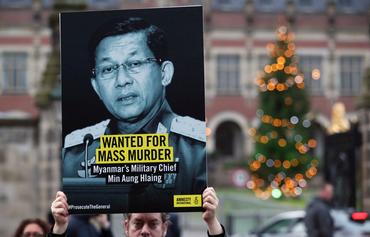
BANGKOK — International outrage over Myanmar’s execution of four political prisoners intensified Tuesday with grassroots protests and strong condemnation from world governments, as well as fears the hangings could derail nascent attempts to bring an end to the violence and unrest that has beset the Southeast Asian nation since the military seized power last year.
Myanmar’s military-led government that seized power from elected leader Aung San Suu Kyi in February 2021 has been accused of thousands of extrajudicial killings since then, but the hangings announced Monday were the country’s first official executions in decades.
“We feel that this is a crime against humanity,” said Malaysian Foreign Minister Saifuddin Abdullah, speaking at the side of the United Nations’ Special Envoy on Myanmar Noeleen Heyzer at a press conference in Kuala Lumpur.
He said the executions would be a focus of the upcoming meetings of the Association of Southeast Asian Nations foreign ministers, which begin in Cambodia in a week.
Myanmar is a member of the influential ASEAN group, which has been trying to implement a five-point consensus it reached on Myanmar last year calling for dialogue among all concerned parties, provision of humanitarian assistance, an immediate cessation of violence and a visit by a special envoy to meet all parties.
With the executions, he said, “we look at it as if the junta is making a mockery of the five point process.”
Heyzer said that the U.N. sees the executions as a “blatant violation” of a person’s “right to life, liberty and security.”
In Bangkok, hundreds of pro-democracy demonstrators protested outside neighboring Myanmar’s embassy, waving flags and chanting slogans amid a heavy downpour.
“The dictators used their power arbitrarily,” yelled a young man through a bullhorn to the crowd, some of whom waved pictures of Suu Kyi or the four executed men. “We can’t tolerate this any more.”
Among the four executed was Phyo Zeya Thaw, a 41-year-old former lawmaker from Suu Kyi’s party, and Kyaw Min Yu, a 53-year-old democracy activist better known as Ko Jimmy. All were tried, convicted and sentenced by a military tribunal with no possibility of appeal.
The executions were carried out over the weekend, and came as a surprise even to family members.
Phyo Zeya Thaw’s mother Khin Win May told The Associated Press she had just spoken with her son via video conference on Friday and he had asked her for reading glasses, books and some spending money.
“I was a little shocked when I heard about the execution, I think it will take some time,” she said.
She said she hoped her son and the others would be seen as martyrs for their cause.
“I’m proud of all of them as they sacrificed their lives for the country,” she said.
The execution of the four activists prompted immediate calls from around the world for a moratorium on carrying out any further sentences, and condemnation for what was broadly seen as a politically motivated move.
Myanmar, formerly known as Burma, announced in June that it was going to resume executing prisoners and has 113 others who have been sentenced to death, although 41 of those were convicted in absentia, according to the Assistance Association for Political Prisoners, a non-governmental organization that tracks killing and arrests. At the same time, 2,120 civilians have been killed by security forces since the military takeover.
“This was a barbaric act by Myanmar’s military regime,” said New Zealand’s Foreign Minister Nanaia Mahuta of the four executions carried out. “New Zealand condemns these actions in the strongest possible terms.”
Australia’s Foreign Minister Penny Wong said she was “appalled” by the executions.
“Australia opposes the death penalty in all circumstances for all people,” she said.
Earlier, Australia and New Zealand had joined the European Union, Japan, the United Kingdom, the United States, Canada, Norway and South Korea in a joint statement condemning the executions.
ASEAN denounced the executions as “highly reprehensible.”
It said the move represented a setback to the group’s efforts to facilitate a dialogue between the military leadership and opponents.
“We strongly and urgently call on all parties concerned to desist from taking actions that would only further aggravate the crisis, hinder peaceful dialogue among all parties concerned, and endanger peace, security and stability, not only in Myanmar, but the whole region,” the group said in a statement.
The military’s seizure of power from Suu Kyi’s elected government triggered peaceful protests that soon escalated to armed resistance and then to widespread fighting that some U.N. experts characterize as a civil war.
Some resistance groups have engaged in assassinations, drive-by shootings and bombings in urban areas. Mainstream opposition organizations generally disavow such activities, while supporting armed resistance in rural areas that are more often subject to brutal military attacks.
News of the executions prompted a flash-demonstration Monday in Myanmar’s largest city, Yangon, where about a dozen protesters took to the streets marching behind a banner saying “we are never afraid,” then quickly slipping away before authorities could confront them.
Similar demonstrations broke out in more rural areas across Myanmar on both Monday and Tuesday.
The last judicial execution to be carried out in Myanmar is generally believed to have been of another political offender, student leader Salai Tin Maung Oo, in 1976 under a previous military government led by dictator Ne Win.
All four executed men had been accused of violent anti-government acts, charges which were denied by their defenders.
Malaysia seizes African tusks, pangolin scales worth $18M
- Details
- Written by northsouth
- Category: Asia
- Hits: 1016
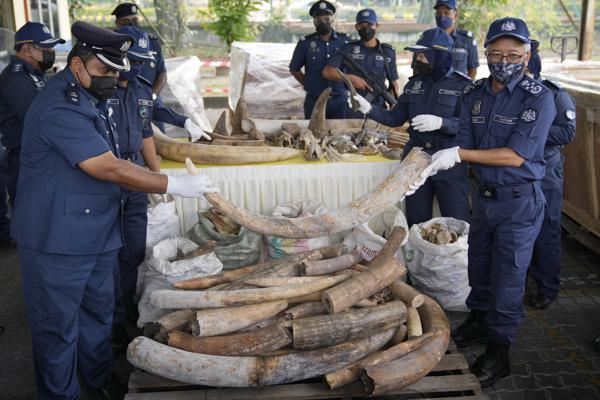
PORT KLANG, Malaysia — Malaysian authorities said Monday they seized a container of African elephant tusks, pangolin scales and other animal skulls and bones estimated to be worth 80 million ringgit ($18 million).
The Customs Department said in a statement it discovered the contraband hidden behind sawn timber following checks on July 10 on a ship coming from Africa. This included 6,000 kilograms (13,227 pounds) of elephant tusks, 100 kilograms (220 pounds) of pangolin scales, 25 kilograms (55 pounds) of rhino horns and 300 kilograms (661 pounds) of animal skulls, bones and horns, it said.
Investigations are ongoing on the importer and shipping agent, the department said without providing further details. It was unclear if the container was meant to be shipped to other parts of Asia. Ivory tusks, rhino horns and pangolin scales are believed to have medicinal properties and are in high demand in the region.
Ex-leader Shinzo Abe critically shot in shock Japan attack
- Details
- Written by northsouth
- Category: Asia
- Hits: 1014
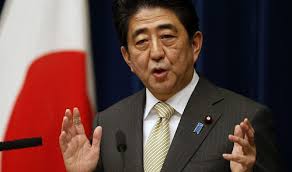
TOKYO - Former Japanese Prime Minister Shinzo Abe, an arch-conservative and one of the country's most divisive figures, was shot and critically wounded during a campaign speech Friday in western Japan. He was airlifted to a hospital but officials said he was not breathing and his heart had stopped.
Police arrested the suspected gunman at the scene of the shocking attack in a country that’s one of the world’s safest and has some of the strictest gun control laws anywhere.
Prime Minister Fumio Kishida said Abe was in “severe condition” and he hoped Abe will survive. Abe is 67 and was Japan’s longest-serving leader before stepping down in 2020 due to a chronic stomach condition.
Kishida called the attack “dastardly and barbaric” and added that the crime occurring during the election campaign, which is the foundation of democracy, was absolutely unforgivable.
Kishida and his Cabinet ministers hastily returned to Tokyo from other campaign events around the country. “I’m praying for former prime minister Abe’s survival from the bottom of my heart,” Kishida said at the prime minister's office after he arrived on a defense helicopter from Yamagata.
Abe was taken to Nara Prefectural University Hospital, and Kishida said he was receiving the utmost medical treatment. He was in cardio and pulmonary arrest as he was being airlifted to the hospital, local fire department official Makoto Morimoto said.
NHK public broadcaster aired dramatic footage of Abe giving a speech outside of a main train station in Nara. He is standing, dressed in a navy blue suit, raising his fist, when a gunshot is heard. Footage then shows Abe collapsed on the street, with several security guards running toward him. He is holding his chest, his shirt smeared with blood.
In the next moment, security guards leap on top of a man in gray shirt, who lies face down on the pavement. A double-barreled device which appeared to be a handmade gun, can be seen on the ground.
Nara prefectural police confirmed the arrest of Tetsuya Yamagami, 41, on suspicion of attempted murder. NHK reported that the suspect served in the Maritime Self-Defense Force for three years in the 2000s.
Other footage from the scene showed campaign officials surrounding Abe, who remains influential in the governing Liberal Democratic Party and heads its largest faction, Seiwakai. Elections for Japan's upper house, the less powerful chamber of its parliament, are Sunday.
“A barbaric act like this is absolutely unforgivable, no matter what the reasons are, and we condemn it strongly,” Japan’s Chief Cabinet Secretary Hirokazu Matsuno said.
Abe, who has had ulcerative colitis since he was a teenager and has said the condition was controlled with treatment, told reporters when he resigned that it was “gut wrenching” to leave many of his goals unfinished. He spoke of his failure to resolve the issue of Japanese abducted years ago by North Korea, a territorial dispute with Russia and a revision of Japan’s war-renouncing constitution.
That last goal was a big reason he was such a divisive figure.
His ultra-nationalism riled the Koreas and China, and his push to create what he saw as a more normal defense posture angered many Japanese. Abe failed to achieve his cherished goal of formally rewriting the U.S.-drafted pacifist constitution because of poor public support.
Loyalists said that his legacy was a stronger U.S.-Japan relationship that was meant to bolster Japan’s defense capability. But Abe made enemies by forcing his defense goals and other contentious issues through parliament, despite strong public opposition.
Abe is a political blue blood who was groomed to follow in the footsteps of his grandfather, former Prime Minister Nobusuke Kishi. His political rhetoric often focused on making Japan a “normal” and “beautiful” nation with a stronger military and bigger role in international affairs.
The Yomiuri Shimbun newspaper printed extra editions, which were quickly grabbed by people on the street to read about the shooting. Nara, once the capital of Japan, is just to the east of Osaka on the country’s main Honshu island.
Many foreign officials expressed shock over the shooting.
Our thoughts, our prayers are with him, with his family, with the people of Japan,” Secretary of State Antony Blinken said while attending a Group of 20 foreign ministers meeting in Bali, Indonesia.
“Abe-san has been an outstanding leader of Japan and unwavering ally of the U.S. The U.S. Government and American people are praying for the well-being of Abe-san, his family, & people of Japan,” Ambassador to Japan Rahm Emanuel wrote on Twitter.
Abe said he was proud of working while leader for a stronger Japan-U.S. security alliance and shepherding the first visit by a serving U.S. president to the atom-bombed city of Hiroshima. He also helped Tokyo gain the right to host the 2020 Olympics by pledging that a disaster at the Fukushima nuclear plant was “under control” when it was not.
Abe became Japan’s youngest prime minister in 2006, at age 52, but his overly nationalistic first stint abruptly ended a year later, also because of his health.
The end of Abe’s scandal-laden first stint as prime minister was the beginning of six years of annual leadership change, remembered as an era of “revolving door” politics that lacked stability and long-term policies.
When he returned to office in 2012, Abe vowed to revitalize the nation and get its economy out of its deflationary doldrums with his “Abenomics” formula, which combines fiscal stimulus, monetary easing and structural reforms.
He won six national elections and built a rock-solid grip on power, bolstering Japan’s defense role and capability and its security alliance with the U.S. He also stepped up patriotic education at schools and raised Japan’s international profile.
Main News
Error: No articles to display
latest news
- New blood test can spot breast cancer at earliest stages, scientists
- Sole bidders Saudi Arabia confirmed as hosts of 2034 men’s World Cup
- Nagasaki survivor accepts Nobel Peace Prize, calls for nuclear free world
- Countering Collapse in Haiti
- Crude oil price and production movements, OPEC
- IFAD, Nepal launch $120 million programme to help over 250,000 people
- DiEM25 challenges EU’s inhumane practices towards migrants
- Malibu wildfires forced thousands to evacuate their homes
- DRC: Senior army officials must be investigated for possible crimes
- Netanyahu describes corruption charges against him as ‘ocean of absurdity’ at trial
- Authorities disrupt migrant smuggling supply chain
- Israeli tanks '16 miles from Damascus' as overnight raids 'destroy Assad army's assets'
- In Haiti, women suffer the consequences of gang violence
- ICC arrest warrants for top Israeli officials are step toward justice
- Poland: Brutal Pushbacks at Belarus Border
- Sudan: War Crimes in South Cordovan, HRW
- Europeans politicians quick to promote hate against Syrian refugees
- Pentagon announces $988 million Ukraine Security Assistance package
- Trump says Russia, Iran in 'weakened state,' calls on Putin to make Ukraine deal
- $1.7 billion in airline funds blocked by governments
- 12 Ways to improve circulation for healthy blood flow, Doctors
- Action against ‘phone phishing’ gang in Belgium, Netherlands: 8 arrests
- $282 million program targeting agriculture and food systems
- What’s happening in Syria? The key developments as Assad flees to Russia
- UK nearly as divided as the US, report finds
Europe
DiEM25 challenges EU’s inhumane practices towards migrants
Authorities disrupt migrant smuggling supply chain
ICC arrest warrants for top Israeli officials are step toward justice
Poland: Brutal Pushbacks at Belarus Border
Europeans politicians quick to promote hate against Syrian refugees
Action against ‘phone phishing’ gang in Belgium, Netherlands: 8 arrests
UK nearly as divided as the US, report finds
Starmer rejects choice between EU and US allies
French government at risk of collapsing over 2025 budget
Belgium convicted of crimes against humanity for acts committed during colonisation
23rd International Economic Forum on Africa Monday 9 December
Putin Approves New Budget With Record Defence Spending
UK MPs back Assisted dying bill after emotionally-charged Commons debate
Ireland goes to polls with three parties neck and neck
Putin full of praise for ‘intelligent and experienced’ Trump
UK to continue selling arms to Israel despite Lebanon ceasefire, Starmer says
Crackdown on illegal streaming network with 22 million users worldwide
France says Israel's Netanyahu has immunity from ICC arrest warrant
Number of Europeans diagnosed with HIV rose in 2023 with new cases in most countries
Georgian prime minister suspends EU membership talks until end of 2028
Russian missile fired at Ukraine carried warheads without explosives
Russia advances in Ukraine at fastest monthly pace since start of war
Why are news outlets not covering crackdown on pro-Palestinian journalists in UK?
Starmer and Lammy are ‘monstrous war criminals’, Palestinian lawyer
Storm Bert brings severe flooding across UK
Asia
Nagasaki survivor accepts Nobel Peace Prize, calls for nuclear free world
IFAD, Nepal launch $120 million programme to help over 250,000 people
Embezzling property tycoon scrambles to raise $9bn to avoid death sentence
Pakistan: Everything we know about clashes between Imran Khan supporters and police
India: Mosque survey dispute erupts into deadly clashes
Taliban detained journalists over 250 times since takeover, UN
Philippines summons VP Duterte over threat to have Marcos killed
Four troops killed in Pakistan as protesters demand release of ex-PM Khan
Thousands of Imran Khan supporters defy arrest to head to capital
Pakistan sealing off capital ahead of planned rally by Imran Khan supporters
Fighting between armed sectarian groups in Pakistan kills at least 33 people
Rise in Afghan opium cultivation reflects economic hardship
Volcano erupts in Bali spewing five-mile ash cloud
New Delhi becomes world’s most polluted city as AQI levels reach 1,000
Pakistan’s toxic smog cover is now visible from space
Chinese driver 'angry about divorce settlement' ploughs into crowd leaving 35 dead
Taliban to attend UN climate conference for first time
Suicide bomber kills 24 in explosion at Pakistan train station
China unveils new heavy rocket that looks similar to SpaceX Starship
North Korea’s new ICBM missile records longest flight time yet
Japanese youth committed to fight poverty and hunger with IFAD
Japan's government in flux after election gives no party majority
Indan Muslims face discrimination after restaurants forced to display workers’ names
IFAD and Thailand sign agreement for new regional office in Bangkok
Nobel Peace Prize was awarded to the Japanese organization Nihon Hidankyo
Africa
DRC: Senior army officials must be investigated for possible crimes
Sudan: War Crimes in South Cordovan, HRW
Angola: US President Biden must demand immediate release of five critics
Wife of 'abducted' Ugandan opposition figure says he won't get justice
S.Africa opposition seeks to revive impeachment proceedings against Ramaphosa
Namibia may elect its first-ever female president in elections this week
Botswana turns to cannabis as diamonds are’s for ever
Influencers and social media beat mainstream media in Kenya
Mali’s ruling military appoints new prime minister
Regenerative Agriculture and Peace-building in South-central Somalia
Wits University unveils pan-African AI centre
'The UK will never forget Sudan,' says David Lammy
Sudan’s displaced have endured ‘unimaginable suffering, brutal atrocities’
Nearly half the world’s 1.1 billion poor live in conflict settings
Sudan war deaths are likely much higher than recorded
Africa’s mineral deposits can power the energy transition
The joint force of the AES ready to launch large-scale operations to secure Sahel
Mystery still surrounds death of revered UN chief Hammarskjöld, 63 years after plane crash
IFAD and Sierra Leone partner to boost farm productivity
Mozambique: End violent post-election crackdown ahead of 7 November Maputo march
Africa: Richer countries must commit to pay at COP29
Sudan’s ‘living nightmare’ continues as 11 million flee war
‘Alarming’ situation in Great Lakes Region of DR Congo
Climate change worsened rains in flood-hit African regions, scientists
African progress backslides as coups and war persist
Americas
Countering Collapse in Haiti
Malibu wildfires forced thousands to evacuate their homes
In Haiti, women suffer the consequences of gang violence
Pentagon announces $988 million Ukraine Security Assistance package
Trump says Russia, Iran in 'weakened state,' calls on Putin to make Ukraine deal
Musk dealt legal defeat in battle over $56 billion Tesla pay deal
Autonomous Systems Impact on Modern Warfare
US, Israel, China, and the Shifting Arms Trade in the Middle East
Support the Court, HRW
Private prisons in US stand to cash in from Trump’s mass deportation plan
G7 Foreign Ministers’ Meeting Statement
War Crimes Weapons: Made in the USA
Trump Cabinet and executive branch of different ideas and eclectic personalities
Trump Says He Will Impose 25% Tariff on Canada and Mexico on Day one
Prosecutors drop election interference and documents cases against Trump
Number of children recruited by gangs in Haiti soars by 70%, UNICEF
Archaeologists discover 4,000-year-old canals used to fish by predecessors of ancient Maya
Democrats in Congress urge Biden to sanction Israelis over West Bank violence
Susan Sarandon opens up on exile from Hollywood after PRO-Palestine remarks
What could Trump’s election win mean for Ukraine and the Middle East
Trump deploys garbage truck to trash Biden gaffe at Wisconsin rally
US calls on Israel to tackle ‘catastrophic humanitarian crisis’ in Gaza
Vinicius's Ballon d’Or snub sparks fury in Brazil amid claims of racism
CNN guest thrown off air after telling Mehdi Hasan:‘I hope your beeper doesn’t go off’
Pentagon warns North Korea as 10,000 troops set to join Russia’s war
Australia & Pacific
Australia passes world-first ban on social media for under 16s into law
New Zealanders save over 30 stranded whales by lifting them on sheets
Commonwealth leaders say 'time has come' for discussion on slavery reparations
Generational export reforms to boost AUKUS trade and collaboration
Australia lawmaker calls opposition leader racist over opposition to Gaza refugees
Agreement strengthens AUKUS submarine partnership
Passionate welcome for WikiLeaks founder Assange as he lands in Australia
Violent protests return to New Caledonia as pro-independence leader extradited
EU and Australia accelerate their digital cooperation
Over 2,000 people thought to have been buried alive in Papua New Guinea landslide
Over 670 people died in a massive Papua New Guinea landslide, UN
Macron says extra security to stay in riot-hit New Caledonia as long as needed
New Caledonia riots: Tourists evacuated, President Macron to visit
Hundreds more French police start deploying to secure New Caledonia
France declares state of emergency in New Caledonia as protests rage
Australia’s 2024 National Defence Strategy
Sydney rocked by second mass stabbing as knifeman attacks bishop
Three dead, 1,000 homes destroyed in Papua New Guinea quake
Australia and UK sign defense and security treaty
Australia tightens student visa rules as migration hits record high
Global food crisis and the effects of climate change need urgent action, IFAD
Indonesia, Australia to sign defence pact within months
Australia to ban doxxing after pro-Palestinians publish information about hundreds of Jews
Australia launches inquiry into why Cabinet documents relating to Iraq war remain secret
Australia says AI will help track Chinese submarines under new Aukus plan
MENA
Netanyahu describes corruption charges against him as ‘ocean of absurdity’ at trial
Israeli tanks '16 miles from Damascus' as overnight raids 'destroy Assad army's assets'
What’s happening in Syria? The key developments as Assad flees to Russia
Who is Abu Mohammed al-Golani, leader of insurgency that toppled Syria’s Assad?
Syrian leader Bashar Assad in Moscow, State news agency
IFAD and Kuwait agree to strengthen efforts to support small-scale farmers
Israel responds to Hezbollah rocket attack with airstrikes on south Lebanon
Egypt: Education Restricted for Refugee
At least 25 killed in counter air strikes by Syrian army on rebels in north-west
UNRWA suspends aid delivery to Gaza after lorries looted at gunpoint
Who are the Syrian rebels HTS and why are they advancing?
Syrian rebels capture centre of Aleppo in major blow to Assad regime
World Central Kitchen stops work in Gaza after three aid workers killed by Israeli strike
Lebanon must elect president during 60-day truce with Israel as part of ceasefire
Abbas clarifies PA presidency succession plan but experts unconvinced
At least 10 killed in Israeli air strike on Beit Lahia
UN calls for accountability and investigations in Israel-Hezbollah conflict
Saudi Arabia approves 2025 budget with estimated $315bn
Lebanon faces $25bn reconstruction bill after Israel-Hezbollah ceasefire
Israeli military to remain in Gaza for years, food minister says
Israeli government orders officials to boycott left-leaning paper Haaretz
In East Jerusalem, record number of homes destroyed to drive out Palestinian residents
Biden: Israel and Hezbollah Ceasefire deal can be blueprint to end Gaza war
Heavy rain and high waves wash away tents of Gaza's displaced
Saudi NEOM gigaproject a 'generational investment,' minister
Banners



Videos
-
Future of car-plane, see it to believe it
https://www.youtube.com/watch?v=D4uSWtazRCM
-
Mehdi Hasan: Islam is a peaceful religion
https://www.youtube.com/watch?v=Jy9tNyp03M0 -
Python swallows antelope whole in under an hour
https://www.youtube.com/watch?v=x0rk5zh7RaE
-
Sangoku dance
http://www.youtube.com/watch?v=Df1SkeiPEAo -
flying 3 kites wonder!
https://www.youtube.com/watch?v=nr9KrqN_lIg
-
Korea has talent
http://www.youtube.com/watch?v=tZ46Ot4_lLo&feature=related -
Paul Potts sings Nessun Dorma
http://www.youtube.com/watch?v=1k08yxu57NA
-
Susan Boyle - Britain's Got Talent
http://www.youtube.com/watch?v=RxPZh4AnWyk -
Twist and Pulse - Britain's Got Talent
http://www.youtube.com/watch?v=1RDiBxbT_CA -
Shaheen Jafargholi (HQ) Britain's Got Talent
http://www.youtube.com/watch?v=VYDM3MIzEHo
High-Quality clip of 12-year-old singer Shaheen Jafargholi auditioning on Britain's Got Talent 2009. First he sings Valerie by The Zutons, as performed by Amy Winehouse, but, after Simon interrupts him and asks for a different song, he just blew everyone away. -
David Calvo juggles and solves Rubik's Cubes
http://www.youtube.com/watch?v=lhkzgjOKeLs
-
Outdoor 'bubble pod' hotel unveiled
http://www.youtube.com/watch?v=9IPBKlWf-cA